Document · English
AI and education systems · EN
Download originalArtificial Intelligence and Education Systems
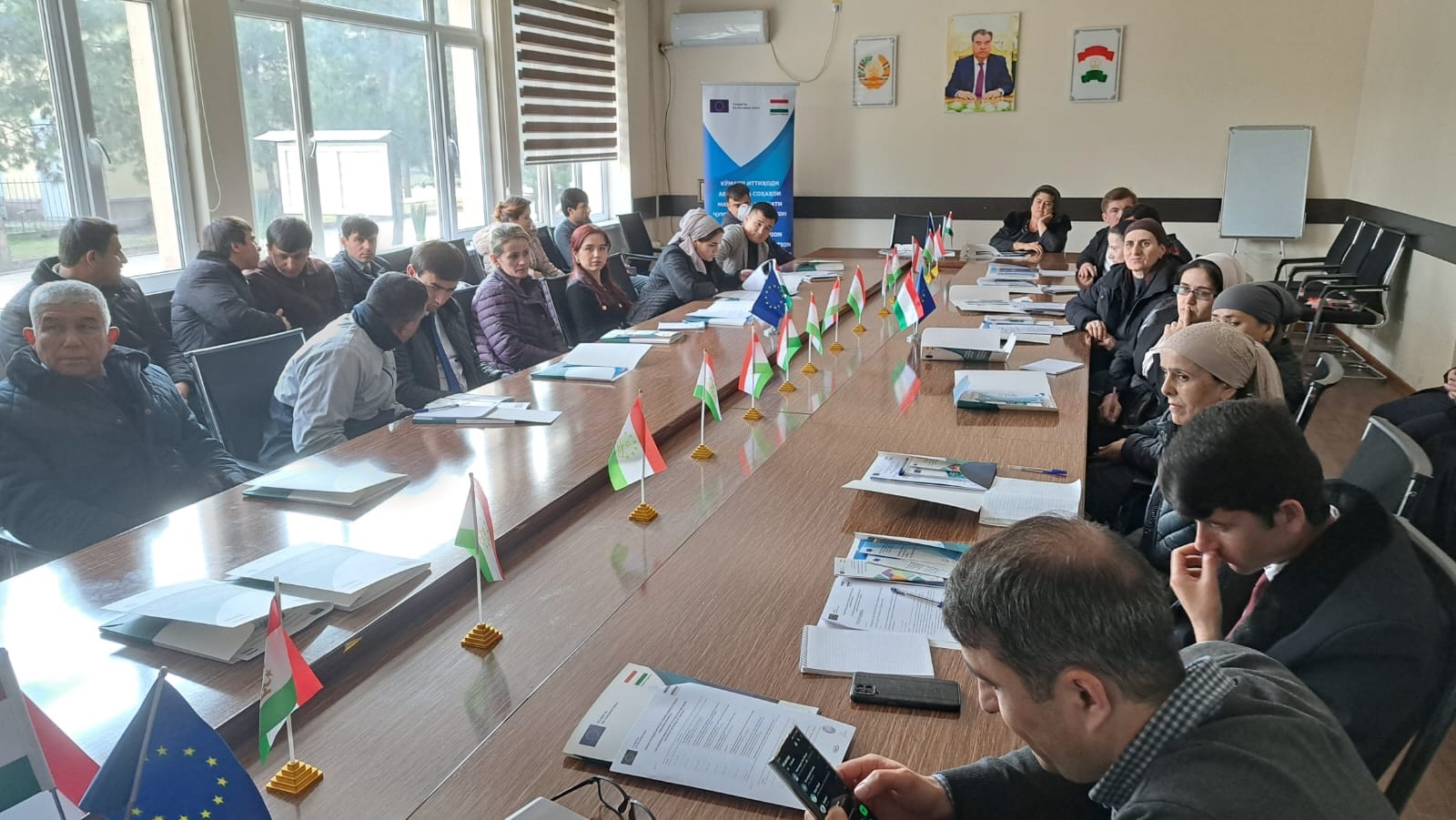
prepared for the workshop of the
Ministry of Education and Science of the Republic of Tajikistan
Building Leadership Capacity for AI Integration
Sarob, Republic of Tajikistan
17 – 18 May 2025
Contact Information:
📧 info_qesp2pro@eductrade.com
🌐 https://maorif.tj/projects/qesp2/news
This publication was produced with the financial support of the European Union. Its contents are the sole responsibility of the consortium led by Eductrade and do not necessarily reflect the views of the European Union.
Executive Summary
Artificial Intelligence (AI) is rapidly reshaping global education systems, presenting both transformative opportunities and significant challenges. This report analyzes the multifaceted impact of AI on education, examining current integration trends, emerging challenges, the interplay with educational reform, labor market dynamics, and societal implications.
Key trends indicate a strong push towards personalized learning, with AI-driven platforms tailoring educational experiences to individual student needs, often leading to improved engagement and outcomes.1 However, the success of such initiatives hinges on effective implementation and student uptake, as mere access to technology does not guarantee improved results.2 Globally, nations are revising curricula to include AI and computer science, recognizing their importance for future workforce preparedness, though approaches vary from centralized mandates to more decentralized frameworks.3 AI is also increasingly used to support teachers by automating administrative tasks and providing instructional aids, yet this potential is often limited by the need for adequate teacher training and professional development.7 While AI offers tools to enhance equity and access, particularly for students with disabilities and multilingual learners 10, there are substantial risks of exacerbating existing inequalities due to the digital divide and algorithmic bias if not proactively addressed.10
Emerging challenges include concerns about critical thinking and overreliance on AI, with studies suggesting a potential negative impact on students' analytical skills due to cognitive offloading.1 Ethical considerations surrounding data privacy, algorithmic bias, and the responsible use of AI are paramount, necessitating robust governance frameworks and transparent practices.15 Furthermore, AI poses significant challenges to assessment integrity, prompting a re-evaluation of traditional methods and the development of AI-resilient assessment strategies.18
The pace of AI development often outstrips the typically slow cycles of educational reform, creating a tension that requires agile policy-making and stakeholder engagement.9 Effective policy development involves balancing innovation with regulation, a challenge nations are addressing through diverse strategies and international collaboration.22 Stakeholder engagement, including educators, policymakers, industry, students, and parents, is critical for navigating these reforms, though managing conflicting priorities and ensuring equitable participation remains a hurdle.24
AI's impact on labor market alignment is profound, necessitating an educational focus on skills such as adaptability, digital literacy, and lifelong learning to prepare students for an AI-driven workforce.26 The potential for AI to either mitigate or exacerbate socioeconomic disparities through its influence on education and employment is a significant concern, requiring careful policy interventions.11 Nations are increasingly leveraging AI in education to enhance their global competitiveness and innovation capacities.22
Finally, societal and cultural considerations, including cultural sensitivity in AI tool design, public perception and trust in AI, and the widespread need for digital literacy, are crucial for the successful and equitable integration of AI in education.36
This report concludes that while AI offers immense potential to revolutionize education, realizing these benefits requires a concerted, collaborative, and ethically grounded approach. Addressing the challenges of equity, critical thinking, and the pace of reform is essential for harnessing AI's power to create more effective, inclusive, and future-ready education systems globally.
List of Contents
Executive Summary 2
Introduction: The AI Revolution in Education 4
The Dawn of AI in Educational Settings 4
Purpose and Scope of the Report 4
Methodology 4
Current Trends in AI Integration within Education 5
Personalized Learning: Tailoring Education to Individual Needs 5
Curriculum Evolution: AI and Computer Science as Core Competencies 5
Teacher Support: AI as an Assistant and Professional Development Tool 6
Equity and Access: Bridging or Widening the Digital Divide? 7
Known Unknowns and Emerging Challenges 9
Critical Thinking and Overreliance: The Cognitive Impact 9
Ethical Considerations: Navigating Privacy, Bias, and Responsible Use 10
Assessment Integrity: Rethinking Evaluation in the Age of AI 11
Education Reform Cycles and AI Integration 13
The Pace of Change: AI's Rapid Evolution vs. Education's Inertia 13
Policy Development: Crafting Frameworks for AI in Education 13
Stakeholder Engagement: Collaborative Approaches to Reform 14
Labor Market Alignment and Societal Implications 16
Workforce Preparedness: Equipping Students for AI-Driven Futures 16
Works cited 17
Introduction: The AI Revolution in Education
The Dawn of AI in Educational Settings
Artificial Intelligence (AI) is no longer a futuristic concept but a rapidly evolving reality, permeating various sectors, including education.1 Its integration into educational environments has moved from simple computer-assisted instruction in the late 20th century to sophisticated AI-driven systems capable of personalizing learning, automating assessments, and even predicting student outcomes.1 This transformation is driven by advancements in machine learning, natural language processing, and data analytics, offering unprecedented opportunities to reshape teaching and learning methodologies.1
Purpose and Scope of the Report
This report aims to provide a comprehensive analysis of the impact of Artificial Intelligence on global education systems. It will delve into current trends in AI integration, exploring how technologies like personalized learning platforms and AI-powered administrative tools are being adopted worldwide. The report will also identify and examine the known unknowns and emerging challenges associated with AI in education, including its effects on critical thinking, ethical considerations such as data privacy and algorithmic bias, and the integrity of assessment methods.
Furthermore, this analysis will explore the complex interplay between the rapid pace of AI development and the traditionally slower cycles of educational reform, considering how policy development and stakeholder engagement are adapting. The alignment of AI-enhanced education with evolving labor market demands and the broader societal and cultural implications, including equity, accessibility, and public perception, will also be critically assessed. The objective is to offer a nuanced understanding of AI's transformative potential and the critical considerations necessary for its responsible and effective integration into education systems globally.
Methodology
The findings and analyses presented in this report are based on a comprehensive review of current research literature, policy documents, and case studies from various international sources. This includes academic papers, reports from international organizations such as UNESCO and the OECD, and articles from reputable news and industry publications. The synthesis of this diverse range of information allows for a multifaceted understanding of the global landscape of AI in education.
Current Trends in AI Integration within Education
The integration of Artificial Intelligence into education is accelerating globally, marked by distinct trends aimed at enhancing learning experiences, streamlining administrative tasks, and preparing students for a technologically advanced future. These trends, while promising, also present unique challenges and require careful consideration for equitable and effective implementation.
Personalized Learning: Tailoring Education to Individual Needs
A primary driver of AI adoption in education is its potential to deliver personalized learning experiences.1 AI-driven platforms are designed to analyze vast amounts of student data, including learning patterns, performance on tasks, and engagement levels, to create customized educational pathways.1 These systems can adapt the difficulty of content, the pace of instruction, and the type of feedback provided to suit individual student needs.1 Intelligent Tutoring Systems (ITS), for example, leverage AI to offer tailored guidance and support, mimicking one-on-one tutoring.1 Platforms like Carnegie Learning's MATHia and Knewton are notable examples of adaptive learning systems that have demonstrated positive impacts on student engagement and academic performance.44
Research suggests that such personalized environments can lead to improved student self-efficacy, a more positive attitude towards education, and better academic outcomes.1 A multi-country study reported a 67% increase in student engagement metrics (time-on-task, participation, homework completion, and self-reported interest) in classrooms using AI-enhanced learning tools.48 Another study indicated that students receiving AI-personalized learning interventions showed 28% higher learning gains over an academic year compared to control groups.48 For instance, 80% of students in one survey agreed that AI enhances their educational experience by optimizing study time and providing quick access to personalized resources.1
However, the successful implementation of personalized learning through AI is not without its challenges. The case of Kyron Learning, an AI-assisted tool, illustrates this. While students who engaged with the platform reported favorable experiences, the study found no measurable improvements in overall academic outcomes, such as assessment pass rates or time to course completion.2 This lack of impact was attributed to low student engagement, likely because the tool was optional and not fully integrated into the course website, requiring students to access it separately.2 This underscores a critical point: the mere availability of AI tools is insufficient. The effectiveness of personalized learning heavily depends on how these tools are integrated into the broader pedagogical strategy and the extent to which students actively use them. Factors such as the design of the learning experience, the clarity of the tool's purpose, and its seamless integration into the existing educational workflow are paramount for realizing the potential benefits of AI in personalized learning.
Curriculum Evolution: AI and Computer Science as Core Competencies
Globally, education systems are increasingly recognizing the imperative to integrate AI and computer science (CS) into curricula, preparing students for a future profoundly shaped by these technologies.3 This trend reflects a growing understanding that AI literacy is becoming a fundamental skill, akin to reading and mathematics.
China has emerged as a frontrunner in this domain, mandating AI courses across its K-12 education system. Starting in the fall of 2025, all primary and secondary schools in Beijing, for instance, will be required to provide at least eight hours of AI instruction annually.3 This initiative, part of China's broader plan to become a global AI leader by 2030, aims to nurture AI literacy from a young age, covering basic concepts for younger students and practical applications and ethics for older students.34 The Chinese Ministry of Education has designated 184 schools as pilot institutions and is investing significantly in hardware, AI labs, and teacher training to support this nationwide rollout.3
The United States is also taking steps to promote AI education. The "Advancing Artificial Intelligence Education for American Youth" executive order, issued in April 2025, establishes a national framework to foster AI literacy and proficiency.5 This initiative emphasizes teacher training, the development of K-12 AI educational resources through public-private partnerships, and the creation of AI-focused workforce development programs.5 While the federal approach is more about guidance and incentives, individual states like California are also actively developing their own AI education policies and task forces.31 However, as of 2024, there was no national requirement for AI coursework, and only a minority of states mandated computer science for high school graduation, indicating a more fragmented approach compared to China.49
Other nations are also advancing AI education. South Korea is rolling out AI-powered digital textbooks for primary and secondary education, with substantial government funding for digital infrastructure and teacher training.33 Australia has approved a National Framework for Generative AI in Schools, emphasizing transparency and responsible use.50 Estonia's KrattAI initiative aims for digital fluency, including AI ethics, for all students aged 7-19 by 2030.61 India's National Education Policy (NEP 2020) emphasizes coding and AI from early grades, with AI becoming an official elective subject for secondary students under the Central Board of Secondary Education (CBSE).22 The United Kingdom's National AI Strategy (2021) includes plans to integrate AI skills into education and train AI PhDs.34
The learning objectives and competencies within these evolving curricula typically cover AI foundations (such as algorithms, programming, and data literacy), understanding and applying AI techniques (including machine learning concepts), and critically examining the ethics and societal impact of AI.56 There is a growing emphasis on developing not just technical proficiency but also critical thinking, creativity, problem-solving, and ethical reasoning skills in relation to AI.26 The UNESCO K-12 AI curricula mapping study identified these core areas, noting that AI foundations often receive the largest time allocation, followed by understanding/using AI and then ethics/social impact.56
The divergence in national strategies—from China's and South Korea's highly centralized and mandated curriculum reforms to the more decentralized, framework-driven approaches in the US and UK—reflects differing educational philosophies and governmental structures. The long-term effectiveness of these varied models in achieving widespread AI literacy, fostering innovation, and ensuring global competitiveness will be a key area to monitor. The speed and uniformity of China's and South Korea's top-down integration may lead to quicker widespread adoption, while the US model, relying on state and local initiatives and public-private partnerships, might result in more varied but potentially more contextually adapted implementations, albeit with a risk of greater inequity if not carefully managed.
Teacher Support: AI as an Assistant and Professional Development Tool
AI technologies are increasingly being positioned as valuable tools to support educators, primarily by alleviating administrative burdens and enhancing instructional capabilities.7 The aim is to free up teachers' time, allowing them to focus more on direct student interaction, personalized support, and creative aspects of teaching.
Administrative Efficiency: A significant portion of a teacher's time is often consumed by non-instructional tasks. AI offers solutions to automate many of these, such as grading (especially for multiple-choice and short-answer questions), scheduling, generating reports, and managing parent communications.7 For example, AI can generate draft lesson plans, translate communications into multiple languages for diverse parent communities, and create summaries of meetings.7 Studies estimate that AI could automate up to 40% of teachers' tasks, potentially saving 7-10 hours per week for educators.69 This reduction in administrative workload is seen as a key factor in improving teacher job satisfaction and potentially retention.67
Instructional Support: Beyond administrative tasks, AI can assist teachers in the classroom. AI-powered platforms can help create differentiated learning materials tailored to various ability levels without requiring teachers to develop multiple versions from scratch.7 They can provide real-time feedback to students, helping them identify areas for improvement more quickly.8 AI tools can also analyze student performance data to offer teachers insights into learning patterns and identify students who might need extra support or intervention.7
Professional Development: AI is also being explored as a tool to enhance teacher professional development. This includes AI-driven coaching platforms that can provide personalized feedback on teaching practices and access to curated resources.63 The US Executive Order on AI in education, for instance, directs the Secretary of Education to prioritize AI in discretionary grant programs for teacher training, including improving teacher training and evaluation.5
However, the successful integration of AI as a support tool for teachers is heavily reliant on adequate training and a willingness to adapt pedagogical approaches. Many educators still report a lack of confidence and preparedness in using AI tools effectively.9 Surveys indicate that while a portion of teachers are using AI, many feel overwhelmed or lack the necessary skills.9 For example, a 2024 report found that only 30% of teachers expressed moderate confidence in using AI-powered tools.72 This highlights a critical gap: without comprehensive professional development that addresses not only technical skills but also ethical considerations and pedagogical integration, the potential benefits of AI for teacher support may not be fully realized. The effectiveness of AI in reducing workload and enhancing instruction is, therefore, not just a technological issue but one that requires significant investment in human capital and a thoughtful approach to change management within educational institutions.
Equity and Access: Bridging or Widening the Digital Divide?
The integration of AI into education presents a dual potential concerning equity and access: it can act as a powerful democratizing force or, conversely, exacerbate existing disparities.10
Potential for Democratization and Enhanced Access:
AI technologies offer promising avenues for making education more accessible and tailored to diverse learners. For students with disabilities, AI-powered assistive technologies like speech-to-text, text-to-speech software, and AI-driven sign language translators can significantly improve their learning experiences.24 For example, tools like Microsoft's Immersive Reader and Google's accessibility features enable students to engage with content in ways that suit their needs.60 AI education models are also being developed to support earlier and more accurate screening for disabilities like dyslexia.24
Multilingual learners can benefit from AI-driven real-time translation tools, such as Google Translate and Microsoft Translator, which help them engage with learning materials in their preferred language, promoting inclusivity in diverse classrooms.24 Personalized learning, a key feature of AI in education, may be particularly impactful for low-income students and students of color, who were disproportionately affected by learning loss during the COVID-19 pandemic.11 The Ready to Learn afterschool program in Pittsburgh, using the Personalized Learning² (PL²) system, demonstrated that a hybrid model of human mentoring and AI tutoring could nearly double math assessment gains for marginalized students.11
Risks of Exacerbating Inequalities:
Despite these potentials, the digital divide remains a formidable barrier. Unequal access to reliable internet, suitable devices, and the necessary digital literacy skills disproportionately affects students in low-income households, rural regions, and marginalized communities.10 This lack of access can prevent these students from benefiting from AI-powered educational innovations, thereby widening existing educational disparities.10 An EDUCAUSE AI Landscape Study highlighted a widening digital divide in AI adoption, with larger, better-resourced institutions more likely to implement AI and view it as an investment.13 Smaller institutions often lack the internal resources and infrastructure for funding AI licenses and support.13
Furthermore, algorithmic bias embedded in AI systems can disadvantage marginalized groups.11 If AI tools are trained on biased data, they may replicate and even amplify these biases in educational settings, affecting everything from student assessment to resource allocation.11 For example, predictive analytics tools might unfairly flag students from certain racial or socioeconomic backgrounds as "high-risk" based on historical data, leading to diminished opportunities or increased scrutiny.11
Policy Interventions and the Path Forward:
Addressing these equity concerns requires deliberate policy interventions. These include investing in digital infrastructure, providing affordable devices, and promoting digital literacy programs for both students and educators, particularly in underserved communities.10 Public-private partnerships can play a role in expanding access to AI tools and resources.60 National policies, like the US Executive Order, aim to promote equitable access and support for underserved schools.5
The capacity of AI to personalize learning for students who have been historically underserved is significant. However, this potential can only be realized if the foundational issues of access and bias are addressed. Without proactive measures, AI risks becoming another tool that benefits the already privileged, thereby deepening the educational divide rather than bridging it. The development and deployment of AI in education must be guided by principles of equity and inclusivity from the outset.
Known Unknowns and Emerging Challenges
While AI offers transformative potential for education, its integration is accompanied by a set of "known unknowns" and emerging challenges that require careful consideration and proactive strategies. These range from the impact on students' cognitive development to ethical dilemmas and the need to adapt traditional educational practices.
Critical Thinking and Overreliance: The Cognitive Impact
A significant concern revolves around the potential for AI tools to hinder the development of critical thinking and problem-solving skills in students.1 The ease with which students can obtain answers or generate content using AI raises fears of overreliance and a reduction in deep cognitive engagement.41
Cognitive Offloading: Research suggests a phenomenon known as "cognitive offloading," where individuals delegate cognitive tasks to external aids like AI, potentially reducing their own mental effort and engagement in reflective thinking.1 Studies have found a significant negative correlation between frequent AI tool usage and critical thinking abilities, with cognitive offloading acting as a mediating factor.1 This effect appears more pronounced in younger participants (ages 17-25), who tend to show higher dependence on AI tools and subsequently lower critical thinking scores compared to older individuals.1 Conversely, higher educational attainment has been associated with better critical thinking skills, irrespective of AI usage, suggesting that a strong educational foundation might offer some resilience.1 Students themselves express concerns about the loss of critical thinking skills and the potential for overreliance.109
Mitigation Strategies: To counter these risks, educational strategies must evolve to promote critical engagement with AI. This involves teaching students not just how to use AI tools, but how to think critically about the information they provide and the processes they automate.100 Educators can:
• Promote Active Engagement with Data: Instead of AI providing direct answers, students can be tasked with interpreting AI-generated data, engaging in hypothesis testing, and identifying patterns.100
• Facilitate Scientific Argumentation: Encourage students to use AI as a tool to gather evidence for debates, with a crucial emphasis on fact-checking and evaluating the AI's output.100
• Critique AI Responses: Students can generate their own ideas first, then compare and contrast them with AI-generated responses, defending their evaluations.115
• Focus on "Human Skills": Design assignments that emphasize skills AI cannot easily replicate, such as deep analysis, ethical reasoning, and creative problem-solving based on synthesizing diverse information.116
• Teach AI Literacy: Educate students about AI's capabilities, limitations, and potential biases, enabling them to become discerning users.106
The challenge is not to prevent the use of AI but to cultivate a new form of literacy where students can leverage AI as a powerful tool while maintaining and developing their own cognitive abilities. This requires a pedagogical shift from rote memorization and information recall towards critical analysis, evaluation, and creative application of knowledge, often in collaboration with AI.
Personalized Learning: Tailoring Education to Individual Needs
A primary driver of AI adoption in education is its potential to deliver personalized learning experiences. AI-driven platforms are designed to analyze vast amounts of student data, including learning patterns, performance on tasks, and engagement levels, to create customized educational pathways. These systems can adapt the difficulty of content, the pace of instruction, and the type of feedback provided to suit individual student needs. Intelligent Tutoring Systems (ITS), for example, leverage AI to offer tailored guidance and support, mimicking one-on-one tutoring. Platforms like Carnegie Learning's MATHia and Knewton are notable examples of adaptive learning systems that have demonstrated positive impacts on student engagement and academic performance.
Across several advanced education systems, AI is not only adapting instruction but redefining its delivery. In South Korea, policymakers envision a future where each child benefits from a personal AI tutor integrated into classroom teaching. These digital assistants personalize content delivery in real time, supplementing the human teacher with one-on-one support tailored to the student’s pace and comprehension level.
In the United States, school districts are piloting adaptive learning platforms that modify question difficulty and feedback based on student responses. These systems, often used in subjects like mathematics and language learning, increase student engagement by transforming lessons into interactive challenges. Gamified learning paths and contextualized problem-solving ensure that students not only stay motivated but also retain mastery over core competencies.
Such examples underscore how global education systems are transitioning toward student-centered learning, in which every learner follows a custom path supported by AI-driven diagnostics and feedback loops.
Teacher Support: AI as an Assistant and Professional Development Tool
AI technologies are increasingly being positioned as valuable tools to support educators, primarily by alleviating administrative burdens and enhancing instructional capabilities. The aim is to free up teachers' time, allowing them to focus more on direct student interaction, personalized support, and creative aspects of teaching.
Beyond automating administrative functions, AI is serving as an intelligent assistant that augments teachers’ situational awareness in the classroom. A compelling case from Finland illustrates this potential: a classroom analytics platform analyzes students’ performance in real time and offers targeted suggestions to educators.
The tool can, for example, identify that a group of five students struggled with a specific aspect of the previous day’s mathematics lesson, such as fraction equivalence. It then delivers a subtle prompt to the teacher—akin to a digital whisper—highlighting specific subtopics where reinforcement is needed. This allows the teacher to adjust the lesson plan dynamically and focus attention where it is most impactful.
Such tools exemplify how AI can enhance formative assessment practices and make teaching more responsive without replacing the educator’s professional judgment. By elevating instructional agility, AI strengthens—not substitutes—pedagogical relationships.
Equity and Access: Bridging or Widening the Digital Divide?
In regions with limited access to qualified teachers, AI is helping democratize high-quality learning. A notable initiative in India has deployed an app that enables students to scan textbook passages using a smartphone, instantly transforming static content into 3D visualizations and interactive explanations. This innovation supports learners in remote or underserved schools who might otherwise lack access to subject-specific expertise.
Equally critical is the challenge of linguistic and cultural localization. Most AI-powered educational tools are built around dominant global languages such as English or Chinese. For countries like Tajikistan, this poses a risk of exclusion, especially where students are taught in Tajik or Russian. The absence of localized AI content can limit adoption and effectiveness, particularly among early-grade learners.
To ensure equitable outcomes, policy interventions must prioritize the development of Tajik-language datasets, culturally relevant AI interfaces, and inclusive design principles. Without such measures, AI’s promise may inadvertently widen existing educational divides rather than close them.
Ethical Considerations: Navigating Privacy, Bias, and Responsible Use
The integration of AI into education brings forth a complex web of ethical considerations that demand careful navigation by policymakers, educators, and developers.15
Data Privacy and Security: AI systems in education often rely on the collection and analysis of vast amounts of student data, including personal information, academic performance, and behavioral patterns.7 This raises significant concerns about data privacy, security, and the potential for misuse.16 Robust data governance frameworks are essential, emphasizing transparency in data collection and usage, obtaining informed consent (especially for minors), and ensuring compliance with regulations like GDPR in Europe and FERPA in the US.7 Strategies such as data minimization, anonymization, pseudonymization, and secure storage are crucial to protect sensitive student information.16
Algorithmic Bias: A persistent and critical challenge is algorithmic bias. AI models are trained on data, and if this data reflects existing societal biases related to race, gender, socioeconomic status, or language, the AI systems can perpetuate and even amplify these biases.8 This can lead to unfair outcomes in student assessments, resource allocation, and even predictive analytics that flag students for interventions.11 For example, AI detectors have been shown to misclassify text produced by non-native English speakers as AI-generated due to linguistic biases in training data.8 Mitigating algorithmic bias requires a multi-pronged approach:
* Diverse and Representative Data: Training AI models on datasets that accurately reflect the diversity of the student population.17
* Bias Audits and Fairness Metrics: Regularly auditing AI systems for bias and employing fairness metrics (e.g., ABROCA, disparity metrics) to assess their impact on different demographic groups.5
* Technical Mitigation Strategies: Employing techniques like adjusting sample weights, bias attenuation methods, and adversarial learning.146
* Human Oversight: Ensuring human review and intervention in AI-driven decisions, especially high-stakes ones.16
* Educator and Student Awareness: Training educators and students to identify and critically evaluate potential biases in AI tools and outputs.5
Ethical Frameworks and Responsible Use:
The development and adoption of AI in education necessitate comprehensive ethical frameworks and guidelines. Organizations like UNESCO and the OECD are actively involved in creating these frameworks, emphasizing principles such as human-centeredness, fairness, transparency, accountability, and inclusivity.22 The EU AI Act, for example, introduces a risk-based approach to AI regulation, which is influencing policies globally.23 The HEAT-AI framework is an example of adapting such regulations specifically for higher education, categorizing AI use by risk level and providing guidelines for each.117
The ethical integration of AI in education is not merely a technical fix; it requires a societal commitment. This involves ongoing dialogue among all stakeholders—educators, students, parents, policymakers, and developers—to continuously evaluate and refine AI applications. The goal is to harness AI's potential to enhance learning while upholding fundamental human values and ensuring that technology serves humanity, rather than the other way around.
Assessment Integrity: Rethinking Evaluation in the Age of AI
The rise of sophisticated generative AI, particularly large language models (LLMs) like ChatGPT, has presented profound challenges to traditional methods of student assessment and academic integrity.18 These tools can generate human-like text, complete assignments, and even solve complex problems, making it increasingly difficult for educators to determine the authenticity of student work and to accurately gauge their understanding and skills.19
Challenges to Traditional Assessment:
Traditional assessment methods, such as essays, reports, and take-home exams, are particularly vulnerable to misuse of generative AI.181 Students can use AI to generate entire pieces of work with minimal effort, bypassing the learning process and potentially undermining the development of critical writing and analytical skills.18 Furthermore, current AI detection tools have proven to be unreliable, often producing false positives, especially for non-native English speakers, or failing to identify AI-generated content effectively.19 This unreliability makes punitive measures based solely on detector output problematic and unfair.19
Innovative Assessment Strategies:
In response to these challenges, educators and institutions are exploring and implementing innovative assessment strategies that are more "AI-resistant" and focus on evaluating higher-order thinking skills, creativity, and the application of knowledge in authentic contexts.20 These strategies include:
• In-class, supervised assessments: Reducing the opportunity for students to use unauthorized AI tools during high-stakes evaluations.183
• Oral examinations, presentations, and debates: These methods assess a student's understanding and ability to articulate their thoughts in real-time, making AI assistance difficult.60
• Project-based learning and authentic tasks: Assignments that require students to engage in complex, real-world problem-solving, often collaboratively, are less susceptible to simple AI generation and better reflect the skills needed in the workforce.20
• Process-oriented assessment: Shifting the focus from the final product to the learning journey, by evaluating drafts, reflections, annotated bibliographies, and student engagement throughout a project.20 This approach makes it harder for AI to be used to shortcut the entire learning process.
• Assessments requiring critical engagement with AI: Designing tasks where students use AI tools and then critique, evaluate, or build upon the AI-generated output. This not only acknowledges the presence of AI but also helps develop critical AI literacy.20
• Multi-layered assignments: Tasks that require students to synthesize information from various sources, connect concepts, and form independent conclusions are more challenging for AI to complete effectively.116
• The AI Assessment Scale (AIAS): Frameworks like the AIAS are being developed to provide clear guidelines to students and faculty on the permissible levels of AI use in different assignments, ranging from no AI use to full AI collaboration.20
Adaptation of Standardized Testing:
Standardized testing organizations like the College Board and ETS are also adapting to the AI era.185 ETS, for example, is moving towards assessing behavioral skills and persistence, using AI to analyze student work and data from various sources beyond traditional tests.185 The College Board has issued specific guidance for AP exams, allowing or restricting AI use depending on the subject, and often requiring checkpoints to ensure authenticity.186 The Digital SAT has already incorporated adaptive features, and AI is being explored for faster test item generation and more efficient scoring.
The advent of powerful generative AI tools necessitates a fundamental shift in how educational assessment is conceptualized and practiced. The focus is moving towards evaluating deeper understanding, critical thinking, creativity, and the ability to apply knowledge in complex situations—skills that are uniquely human and less susceptible to AI replication. This transition requires ongoing research, professional development for educators, and clear institutional policies on academic integrity in the age of AI.
Education Reform Cycles and AI Integration
The integration of AI into education is occurring against the backdrop of established educational systems, each with its own pace of reform, policy development processes, and stakeholder dynamics. The rapid evolution of AI technology creates a unique tension with these often slower, more deliberate processes.
The Pace of Change: AI's Rapid Evolution vs. Education's Inertia
A significant challenge in integrating AI into education is the inherent mismatch between the rapid, almost exponential, advancement of AI technologies and the traditionally slow and often bureaucratic pace of educational reform.9 AI capabilities are evolving weekly, with new models and applications emerging constantly, while educational systems, by their nature, tend to implement changes over longer timescales, involving curriculum reviews, policy approvals, and teacher training initiatives that can span months or even years.21 This disparity creates a risk that educational institutions may consistently lag behind technological advancements, potentially rendering their curricula and teaching methods outdated before new reforms are even fully implemented.21
Bureaucratic and Financial Hurdles: Educational institutions, particularly public K-12 systems and even higher education, often face significant bureaucratic hurdles.13 These can include complex procurement processes for new technologies, which may not be agile enough to keep up with the fast-evolving AI market.158 The "many hands" problem in public sector procurement, where responsibility is diffused across multiple administrative levels, can further slow down decision-making and implementation.197
Financial constraints are another major barrier. Only a small percentage of institutions report having new sources of funding specifically for AI initiatives, and many executive leaders underestimate the financial burden of AI implementation, which includes not just software licenses but also infrastructure upgrades and ongoing maintenance.13 This is particularly acute for smaller or under-resourced institutions, widening the digital divide in AI adoption.13 The lack of adequate connectivity in a significant number of school districts also hinders equitable AI integration.72
Educator Resistance and Preparedness: Beyond systemic issues, educator resistance or unpreparedness can also slow AI adoption.9 This resistance is not new; education has historically seen skepticism towards new technologies. Specific to AI, concerns include its efficacy, potential for job displacement, the need for significant pedagogical shifts, and the constant pressure to keep up with technological advancements.9 Many teachers feel they lack the necessary skills and knowledge to effectively integrate AI, leading to technological anxiety.9 Studies show that only a fraction of educators feel confident using AI tools, and a significant number report that their districts lack clear AI policies, leaving them without guidance.72 In rural contexts, additional barriers such as regulations banning smartphone use and low student motivation further complicate AI integration.201
The consequence of this inertia is that education systems risk falling behind, failing to adequately prepare students for an AI-driven future and potentially missing out on AI's benefits for teaching and learning. Addressing this requires not only financial investment but also a fundamental shift towards more agile and adaptive policy-making, streamlined administrative processes, and a concerted effort to build AI literacy and confidence among educators.
Policy Development: Crafting Frameworks for AI in Education
As AI technologies become more integrated into society, governments and educational institutions worldwide are grappling with the need to develop policies that guide their use in education.22 This process involves navigating the complex interplay between fostering innovation and implementing necessary regulations to mitigate risks.
Global Approaches to AI Regulation:
The regulatory landscape for AI is diverse and rapidly evolving. Some jurisdictions, like the European Union with its AI Act, have adopted comprehensive, legally binding, horizontal frameworks that apply across sectors, including education.23 The EU AI Act, for example, employs a risk-based approach, categorizing AI systems and imposing stricter requirements on high-risk applications, such as certain educational tools.118 Other countries, like the United States and China, also have legally binding instruments, though their approaches differ. The U.S. has relied on executive orders and existing regulatory authorities, promoting a more policy-driven and collaborative model, while China has taken a more directive, sectoral approach with specific regulations for areas like generative AI.23 Countries like Canada and Brazil are developing horizontal, risk-based legislation inspired by the EU model.23 In contrast, nations such as the UK, Israel, Australia, Japan, and Singapore have, to varying degrees, favored sector-specific guidelines, voluntary frameworks, or are in earlier stages of developing binding regulations.23
Balancing Innovation and Regulation:
A central challenge in AI policy development for education is striking the right balance between encouraging innovation and ensuring safety, ethics, and equity.23 Overly rigid or prematurely implemented regulations can stifle creativity and slow down the adoption of beneficial AI tools.120 Conversely, a lack of oversight can lead to ethical breaches, exacerbate inequalities, and undermine public trust.117 Singapore is often cited as an example of a nation attempting to achieve strong regulation while maintaining high levels of AI innovation.120 The "pathology of planning"—an overreliance on top-down control based on speculative worst-case scenarios—can lead to burdensome rules that hinder progress.202
Frameworks and Guidelines:
International organizations like UNESCO and the OECD are playing a crucial role in developing global guidelines and competency frameworks for AI in education.22 UNESCO's frameworks, for example, emphasize a human-centered approach, inclusivity, equity, transparency, and accountability.24 The OECD's AI Policy Observatory for Education supports evidence-based policymaking and promotes AI literacy and ethical use.22 At the institutional level, frameworks like HEAT-AI (Higher Education Act for AI) adapt broader regulations, such as the EU AI Act, to the specific context of universities, providing guidance on acceptable use, risk management, and academic integrity.117
The dynamic nature of AI technology necessitates that these policy frameworks are not static. They must be flexible and regularly reviewed and adapted to address new developments, emerging risks, and evolving societal values.125 This ongoing process requires continuous dialogue and collaboration among all stakeholders to ensure that AI is harnessed responsibly for the betterment of education.
Stakeholder Engagement: Collaborative Approaches to Reform
The successful and ethical integration of AI into education systems is not solely a top-down endeavor; it necessitates robust engagement and collaboration among a diverse array of stakeholders. These include educators, policymakers, industry leaders, researchers, students, and parents, each bringing unique perspectives, expertise, and concerns to the table.5
Models of Collaboration:
Public-Private Partnerships (PPPs) are emerging as a significant model for AI integration in education. These partnerships aim to leverage public sector oversight and funding with private sector innovation and technological expertise.60 For example, initiatives like Khan Academy's Khanmigo, piloted with philanthropic support, and collaborations between governments and tech companies like Microsoft and Google to provide low-cost AI tools, illustrate this trend.60 Organizations such as the EdSAFE AI Alliance are actively working to bring together diverse stakeholders—educators, policymakers, researchers, and technology companies—to develop frameworks (like the SAFE framework) and open-source policy resources for schools and districts.24 The US government's AI executive order also explicitly calls for public-private partnerships to develop K-12 AI education resources.5
The OECD's "Digital Education Outlook 2023" emphasizes the value of Triple Helix (universities, industry, government) and Quadruple Helix (adding civil society/users) models to foster dynamic innovation ecosystems.144 These models promote co-creation and knowledge exchange, moving beyond linear innovation pathways. Case studies from the OECD report, such as the National Education Lab AI (NOLAI) in the Netherlands and the Swiss EdTech Collider, demonstrate different partnership structures aimed at developing and evaluating AI technologies for education.144 These initiatives often involve universities, research institutions, government bodies, non-profits, and industry partners, highlighting a global trend towards collaborative development.
Challenges in Stakeholder Engagement:
Despite the recognized importance of collaboration, engaging diverse stakeholders effectively presents several challenges. A primary hurdle is bridging the gap between different groups' priorities and understanding. For example, educators may prioritize pedagogical soundness and student well-being, while tech developers might focus on innovation and marketability, and policymakers on scalability and cost-effectiveness.24 Power imbalances can also occur, where dominant stakeholders like large tech companies might disproportionately influence policy and development, potentially overshadowing the concerns of students, parents, or educators from marginalized communities.178
Ensuring that AI tools are developed and implemented in a way that is culturally sensitive and meets the diverse needs of all learners requires inclusive design processes that actively involve end-users from the beginning.125 Fragmented stakeholder engagement, where different groups work in silos, can lead to inefficiencies and misaligned efforts.206
The Role of Students and Parents:
Students are increasingly using AI tools, often independently of formal school policies.1 Their perspectives on the benefits (e.g., feedback, study support) and risks (e.g., academic integrity, accuracy) of AI are crucial for shaping effective policies.109 Some initiatives, like Anthropic's "Claude Campus Ambassadors," directly involve students in launching educational initiatives.220 Case studies also show students participating in the co-design and testing of EdTech tools, particularly in higher education and specialized fields like agriculture, where they contribute to developing and refining AI applications.210
Parents are generally supportive of AI in education but express concerns about its impact on their children's learning, career opportunities, and the potential for overreliance.25 They advocate for more regulation and a seat at the table in policy discussions, often through Parent-Teacher Associations (PTAs) and other advocacy groups.25 Frameworks like the AI Indicator are being developed to help bridge the understanding gap between educators, students, and parents regarding AI use.184
The successful integration of AI into education is not merely a technological or pedagogical shift but a societal one. It demands a "whole-of-society" approach where the diverse voices, expertise, and concerns of all stakeholders are actively solicited, valued, and integrated into the reform process. Without this collaborative spirit, AI education policies risk being ineffective, inequitable, or met with resistance, ultimately failing to harness the full transformative potential of AI for learning.
Labor Market Alignment and Societal Implications
The integration of AI into education systems is inextricably linked to the evolving demands of the labor market and carries profound societal implications. Preparing students for an AI-driven future, addressing potential economic disparities, and leveraging AI for national competitiveness are critical considerations.
Workforce Preparedness: Equipping Students for AI-Driven Futures
AI is rapidly transforming industries, leading to a significant shift in the skills and competencies required in the workforce.1 The demand for individuals who can not only use AI tools but also understand their underlying principles, ethical implications, and societal impacts is growing.62 Educational institutions are thus tasked with integrating AI literacy across curricula.26 This involves teaching technical skills for using AI, human skills such as critical thinking and collaboration to work alongside AI, and ethical reasoning to ensure responsible AI use.26 The goal is to shift students from being passive consumers of AI to active, informed users and potential creators.5
Adaptability and Lifelong Learning: The rapid evolution of AI means that specific technical skills can quickly become obsolete.163 Therefore, education systems must foster adaptability and a commitment to lifelong learning.5 This involves teaching students how to learn, how to critically evaluate new information, and how to reskill and upskill throughout their careers.27 AI itself can support lifelong learning by providing personalized learning paths and on-demand access to educational resources.42 Initiatives like IBM's Open P-TECH and platforms such as Coursera and LinkedIn Learning are leveraging AI to offer industry-aligned training and personalized career development pathways for adult learners and professionals.83
Human-AI Collaboration: The future of work is increasingly seen as a collaboration between humans and AI, where AI augments human capabilities rather than entirely replacing them.5 Educational programs are therefore focusing on developing skills that are uniquely human and complementary to AI, such as emotional intelligence, complex problem-solving, creativity, and ethical judgment.1
• Insight: Preparing students for the future workforce is not just about teaching them to use AI, but about cultivating a broader set of cognitive, social, and ethical competencies that enable them to thrive in a world where AI is ubiquitous. The focus must be on skills that AI complements rather than replaces.
• Chain of Thought: The job market is changing due to AI.27 Some jobs will be automated, while new ones requiring AI skills will emerge.218 Therefore, education needs to equip students with skills that are in demand in this new landscape, such as technical AI proficiency, critical thinking, creativity, and ethical awareness [4
Works cited
• The Impact of Artificial Intelligence (AI) on Students' Academic Development - MDPI, accessed May 10, 2025, https://www.mdpi.com/2227-7102/15/3/343
• The Impact of an AI Tool on Student Outcomes | WGU Labs, accessed May 10, 2025, https://www.wgulabs.org/posts/the-impact-of-an-ai-assisted-learning-tool-on-student-outcomes-research-brief
• China to introduce AI courses for students as young as 6 ..., accessed May 10, 2025, https://e.vnexpress.net/news/tech/tech-news/china-to-introduce-ai-courses-for-students-as-young-as-6-4860812.html
• Beijing Launches AI Education for Kids: Ready to Shape the Future ..., accessed May 10, 2025, https://opentools.ai/news/beijing-launches-ai-education-for-kids-ready-to-shape-the-future
• Advancing Artificial Intelligence Education for American Youth - The White House, accessed May 10, 2025, https://www.whitehouse.gov/presidential-actions/2025/04/advancing-artificial-intelligence-education-for-american-youth/
• Executive Order: Advancing Artificial Intelligence Education for American Youth | Insights, accessed May 10, 2025, https://www.hklaw.com/en/insights/publications/2025/04/executive-order-advancing-ai-education-for-american-youth
• How AI Will Affect Teaching - Panorama Education, accessed May 10, 2025, https://www.panoramaed.com/blog/how-ai-will-affect-teaching
• AI in Schools: Pros and Cons | Illinois, accessed May 10, 2025, https://education.illinois.edu/about/news-events/news/article/2024/10/24/ai-in-schools--pros-and-cons
• Breaking Barriers: A Meta-Analysis of Educator Acceptance of AI ..., accessed May 10, 2025, https://michiganvirtual.org/research/publications/breaking-barriers-a-meta-analysis-of-educator-acceptance-of-ai-technology-in-education/
• www.researchcorridor.org, accessed May 10, 2025, https://www.researchcorridor.org/index.php/jaiie/article/download/259/248
• How will AI Impact Racial Disparities in Education? - Stanford ..., accessed May 10, 2025, https://law.stanford.edu/2024/06/29/how-will-ai-impact-racial-disparities-in-education/
• iiardjournals.org, accessed May 10, 2025, https://iiardjournals.org/get/IJEMT/VOL.%2011%20NO.%204%202025/Regulating%20the%20Digital%20Divide%20309-325.pdf
• Survey: Higher Ed AI Adoption Faces Financial, Policy Hurdles - GovTech, accessed May 10, 2025, https://www.govtech.com/education/higher-ed/survey-higher-ed-ai-adoption-faces-financial-policy-hurdles
• AI Tools in Society: Impacts on Cognitive Offloading and the Future of Critical Thinking, accessed May 10, 2025, https://www.mdpi.com/2075-4698/15/1/6
• raiffet2025.sciencesconf.org, accessed May 10, 2025, https://raiffet2025.sciencesconf.org/642619/document
• ai4edu.eu, accessed May 10, 2025, https://ai4edu.eu/wp-content/uploads/2025/04/9a.-Safeguarding-student-data-in-AI-driven-education-EUAI-ACt-and-UNESCOs-Frameworks.pdf
• Algorithmic bias - Wikipedia, accessed May 10, 2025, https://en.wikipedia.org/wiki/Algorithmic_bias
• (PDF) Academic Integrity in the Age of Artificial Intelligence ..., accessed May 10, 2025, https://www.researchgate.net/publication/386552721_Academic_Integrity_in_the_Age_of_Artificial_Intelligence_Exploring_Ethical_Challenges_in_A_Digital_Era
• From Tool to Temptation: AI's Impact on Academic Integrity ..., accessed May 10, 2025, https://www.umass.edu/ideas/news/tool-temptation-ais-impact-academic-integrity
• Assessment and Generative AI | Center for Educational Innovation, accessed May 10, 2025, https://cei.umn.edu/teaching-resources/assessments/assessment-and-generative-ai
• Building connections with AI industry is vital to keeping degrees ..., accessed May 10, 2025, https://www.timeshighereducation.com/opinion/building-connections-ai-industry-vital-keeping-degrees-relevant
• Shaping the future: Higher education's impact on national AI policies - Iesalc-Unesco, accessed May 10, 2025, https://www.iesalc.unesco.org/en/articles/shaping-future-higher-educations-impact-national-ai-policies
• www.bakom.admin.ch, accessed May 10, 2025, https://www.bakom.admin.ch/dam/bakom/en/dokumente/KI/analyse_laender.pdf.download.pdf/Analysis%20of%20countries%20and%20regions%20around%20the%20world.pdf
• Artificial Intelligence in Education: Opportunities, Challenges, and Policy Considerations for Congress Testimony by Erin Mote, accessed May 10, 2025, https://edworkforce.house.gov/uploadedfiles/mote_testimony_4.1.25.pdf
• Parental involvement in AI-fueled education: A call for equity ..., accessed May 10, 2025, https://spokesman-recorder.com/2025/03/19/ai-education-racial-disparities/
• Connecting AI Literacy, Learning Outcomes, and Career-readiness, accessed May 10, 2025, https://www.adobeforeducation.com/post/connecting-ai-literacy-learning-outcomes-and-career-readiness
• CRA Quadrennial Paper: Preparing the Workforce for an AI-Driven ..., accessed May 10, 2025, https://cra.org/industry/2025/02/26/cra-quadrennial-paper-preparing-the-workforce-for-an-ai-driven-future/
• Three Reasons Why AI May Widen Global Inequality | Center For ..., accessed May 10, 2025, https://www.cgdev.org/blog/three-reasons-why-ai-may-widen-global-inequality
• The Role of Higher Education in National Artificial Intelligence Strategies: A Comparative Policy Review - Iesalc-Unesco, accessed May 10, 2025, https://www.iesalc.unesco.org/en/articles/role-higher-education-national-artificial-intelligence-strategies-comparative-policy-review
• Case Study: AI Integration in Singapore's Education Sector - AIX | AI ..., accessed May 10, 2025, https://aiexpert.network/ai-integration-in-singapores-education-sector/
• PACE - State Education Policy and the New Artificial Intelligence, accessed May 10, 2025, https://edpolicyinca.org/publications/state-education-policy-and-new-artificial-intelligence
• www.asiapacific.ca, accessed May 10, 2025, https://www.asiapacific.ca/sites/default/files/publication-pdf/AI%20K-12%20Education%20Report_FINAL.pdf
• The Global Landscape of Artificial Intelligence Education in Schools: A Comparative Analysis - Omics tutorials, accessed May 10, 2025, https://omicstutorials.com/the-global-landscape-of-artificial-intelligence-education-in-schools-a-comparative-analysis/
• (PDF) AI in Education: Global Trends and Country-by-Country Analysis (2018-2023), accessed May 10, 2025, https://www.researchgate.net/publication/389043586_AI_in_Education_Global_Trends_and_Country-by-Country_Analysis_2018-2023
• Teachers are leading an AI revolution in Korean classrooms - World Bank Blogs, accessed May 10, 2025, https://blogs.worldbank.org/en/education/teachers-are-leading-an-ai-revolution-in-korean-classrooms
• Designing AI for Cultural Diversity :: UXmatters, accessed May 10, 2025, https://www.uxmatters.com/mt/archives/2025/04/designing-ai-for-cultural-diversity.php
• Survey Highlights an Emerging Divide Over Artificial Intelligence in ..., accessed May 10, 2025, https://newbrunswick.rutgers.edu/news/survey-highlights-emerging-divide-over-artificial-intelligence-us
• AI in education: ensuring teacher agency in a technology ..., accessed May 10, 2025, https://www.acer.org/id-id/discover/article/ai-in-education-ensuring-teacher-agency-in-a-technology-empowered-world
• Digital Education Action Plan – Action 6 - European Education Area, accessed May 10, 2025, https://education.ec.europa.eu/focus-topics/digital-education/action-plan/action-6
• 10 Impactful Examples of AI Ethics Shaping Schools Today - Number Analytics, accessed May 10, 2025, https://www.numberanalytics.com/blog/impact-ai-ethics-schools
• www.ijiet.org, accessed May 10, 2025, https://www.ijiet.org/vol14/IJIET-V14N12-2207.pdf
• AI in Lifelong Learning: A Path to Sustainable Distance Education - ResearchGate, accessed May 10, 2025, https://www.researchgate.net/publication/388029858_AI_in_Lifelong_Learning_A_Path_to_Sustainable_Distance_Education
• How artificial intelligence in education is transforming classrooms, accessed May 10, 2025, https://learningsciences.smu.edu/blog/artificial-intelligence-in-education
• 7 Vital Ways AI Drives Education Policy Change in 2023 - Number Analytics, accessed May 10, 2025, https://www.numberanalytics.com/blog/7-vital-ways-ai-drives-education-policy-change-2023
• (PDF) Ethical AI in schools: Balancing automation, privacy, and ..., accessed May 10, 2025, https://www.researchgate.net/publication/390805707_Ethical_AI_in_schools_Balancing_automation_privacy_and_human_oversight
• Generative AI in Higher Education: Balancing Innovation and Integrity - PMC, accessed May 10, 2025, https://pmc.ncbi.nlm.nih.gov/articles/PMC11756388/
• (PDF) Leveraging AI to Mitigate Educational Inequality ..., accessed May 10, 2025, https://www.researchgate.net/publication/389368960_Leveraging_AI_to_Mitigate_Educational_Inequality_Personalized_Learning_Resources_Accessibility_and_Student_Outcomes
• 5 Key Statistics: AI's Impact on Global Education Policy Trends, accessed May 10, 2025, https://www.numberanalytics.com/blog/5-key-statistics-ais-impact-global-education-policy-trends
• futureofbeinghuman.com, accessed May 10, 2025, https://futureofbeinghuman.com/api/v1/file/2737ea4a-2ca4-4cb5-85cb-4c9ad88f6204.pdf
• Comparative Analysis of Generative AI Policies in Education, accessed May 10, 2025, https://www.niallmcnulty.com/2025/02/comparative-analysis-of-generative-ai-policies-in-education/
• The Future of Schooling: How AI Is Changing Standardized Testing ..., accessed May 10, 2025, https://aijourn.com/the-future-of-schooling-how-ai-is-changing-standardized-testing/
• Examples of possible academic integrity policies that address student use of generative AI tools - Eberly Center - Carnegie Mellon University, accessed May 10, 2025, https://www.cmu.edu/teaching/technology/aitools/academicintegrity/index.html
• ARTIFICIAL INTELLIGENCE: THE FUTURE OF K12 CURRICULUM ..., accessed May 10, 2025, https://skoolofcode.us/blog/artificial-intelligence-the-future-of-k12-curriculum/
• Incorporating AI into the Curriculum: Preparing Students for the Future, accessed May 10, 2025, https://www.bluum.com/resources/artificial-intelligence-in-education
• Shockwaves and innovations: How nations worldwide are dealing with AI in education, accessed May 10, 2025, https://crpe.org/shockwaves-and-innovations-how-nations-worldwide-are-dealing-with-ai-in-education/
• K-12 AI curricula: a mapping of government-endorsed AI curricula, accessed May 10, 2025, https://unesdoc.unesco.org/ark:/48223/pf0000380602
• AI-Powered Smart Learning: The Future Of K-12 Education - Oliver Wyman, accessed May 10, 2025, https://www.oliverwyman.com/our-expertise/insights/2024/oct/ai-powered-smart-learning-for-education.html
• (PDF) A Differentiated Discussion About AI Education K-12 - ResearchGate, accessed May 10, 2025, https://www.researchgate.net/publication/351568923_A_Differentiated_Discussion_About_AI_Education_K-12
• Beijing Mandates AI Education in Schools - Logiscool United States, accessed May 10, 2025, https://www.logiscool.com/us/blog/logiscool/beijing-mandates-ai-education-in-schools
• How AI Has Transformed K-12 Education in the Last Two Years, accessed May 10, 2025, https://edcircuit.com/how-ai-has-transformed-k-12-education-in-the-last-two-years/
• AI goes to school: The global AI education race, opportunities and perils - Development Aid, accessed May 10, 2025, https://www.developmentaid.org/news-stream/post/194647/ai-transforming-education
• Integrating AI skills prepares graduates for workforce needs - Ellucian, accessed May 10, 2025, https://www.ellucian.com/blog/empower-graduates-workforce-ai-literacy-and-ethics
• How AI Is Reshaping Teachers' Jobs - Education Week, accessed May 10, 2025, https://www.edweek.org/technology/how-ai-is-reshaping-teachers-jobs
• Exploring the Impact of Artificial Intelligence in Education - MGT.AI, accessed May 10, 2025, https://www.mgt.ai/insights/exploring-the-impact-of-artificial-intelligence-in-k-12-education/
• Mastering the Artificial Intelligence Teacher: Best Practices and Tools | AFA Education Blog, accessed May 10, 2025, https://afaeducation.org/blog/mastering-the-artificial-intelligence-teacher-best-practices-and-tools/
• Full article: Utilising GenAI to create a culturally responsive EFL curriculum for pre-teen learners in the MENA region - Taylor & Francis Online, accessed May 10, 2025, https://www.tandfonline.com/doi/full/10.1080/03004279.2025.2502016?src=
• Improve Teacher Retention with AI - Panorama Education, accessed May 10, 2025, https://www.panoramaed.com/blog/improve-teacher-retention-with-ai
• (PDF) Advancing human resources management practices in ..., accessed May 10, 2025, https://www.researchgate.net/publication/382857980_Advancing_human_resources_management_practices_in_educational_institutions_Enhancing_teacher_retention_and_student_outcomes_using_AI
• Full article: Transforming School Leadership with Artificial Intelligence: Applications, Implications, and Future Directions - Taylor & Francis Online, accessed May 10, 2025, https://www.tandfonline.com/doi/full/10.1080/15700763.2024.2411295
• AI and Teacher Productivity: A Quantitative Analysis of Time-Saving and Workload Reduction in Education - ResearchGate, accessed May 10, 2025, https://www.researchgate.net/publication/387980511_AI_and_Teacher_Productivity_A_Quantitative_Analysis_of_Time-Saving_and_Workload_Reduction_in_Education
• Varsity Tutors Launches Live + AI™ Platform for Schools, Delivering ..., accessed May 10, 2025, https://markets.ft.com/data/announce/detail?dockey=600-202504291726BIZWIRE_USPRX____20250429_BW401366-1
• AI Integration and Barriers in Education — AMT Lab @ CMU, accessed May 10, 2025, https://amt-lab.org/blog/2025/2/msilfg56bx7l3pgscl8ia13j86yeed
• More Districts Are Training Teachers on Artificial Intelligence - RAND, accessed May 10, 2025, https://www.rand.org/pubs/research_reports/RRA956-31.html
• AI-Driven Educational Policy Design: Enhancing Equity and Access through Intelligent Data Analytics - iiard, accessed May 10, 2025, https://www.iiardjournals.org/get/IJCSMT/VOL.%2011%20NO.%203%202025/AI-Driven%20Educational%20Policy%201-19.pdf
• Principles | AI Guidance for Schools Toolkit - TeachAI, accessed May 10, 2025, https://www.teachai.org/toolkit-principles
• The Future of AI Regulation in South Africa, India, and Brazil | Crowell & Moring LLP, accessed May 10, 2025, https://www.crowell.com/en/insights/publications/the-future-of-ai-regulation-in-south-africa-india-and-brazil
• How AI Can Improve Education in Developing Countries - The School House Anywhere, accessed May 10, 2025, https://www.tshanywhere.org/post/ai-improve-education-developing-countries
• Provide Equal Access to AI | AAMC, accessed May 10, 2025, https://www.aamc.org/about-us/mission-areas/medical-education/principles-ai-use/provide-equal-access-ai
• From Commitment to Action: Advancing the use of AI in education in Africa through regional collaboration and knowledge-sharing | GPEKIX, accessed May 10, 2025, https://www.gpekix.org/blog/commitment-action-advancing-use-ai-education-africa-through-regional-collaboration-and
• Artificial intelligence as a policy response to teaching and learning issues in education in Ghana - ERIC, accessed May 10, 2025, https://files.eric.ed.gov/fulltext/EJ1455735.pdf
• Integrating artificial intelligence into African health systems and emergency response: Need for an ethical framework and guidelines, accessed May 10, 2025, https://pmc.ncbi.nlm.nih.gov/articles/PMC11966719/
• Inclusive Education with AI: Supporting Special Needs and Tackling Language Barriers, accessed May 10, 2025, https://arxiv.org/html/2504.14120v1
• AI in Education: Preparing Students for Workforce Readiness, accessed May 10, 2025, https://www.zinfi.com/blog/ai-in-education-workforce-readiness/
• AI in Education: Benefits, Challenges, and Best Practices - OpenLearning Blog, accessed May 10, 2025, https://blog.openlearning.com/ai-in-education
• Generative AI for K-12 education | Research Report by Applify, accessed May 10, 2025, https://applify.co/research-report/gen-ai-for-k12
• Ensuring Equity in AI within U.S. Higher Education – Joni Gutierrez, accessed May 10, 2025, https://jonigutierrez.com/blog/ensuring-equity-in-ai-within-u-s-higher-education/
• 'High-Risk' by Algorithm: AI Bias Threatens Student Equity - VKTR.com, accessed May 10, 2025, https://www.vktr.com/ai-ethics-law-risk/higher-educations-ai-dilemma-powerful-tools-dangerous-tradeoffs/
• Capacity Building Grant Will Allow School Systems to Become More AI-Ready | AASA, accessed May 10, 2025, https://www.aasa.org/news-media/news/2025/01/15/capacity-building-grant-will-allow-school-systems-to-become-more-ai-ready
• Role of Public-Private Partnerships in Transforming Education - ResearchGate, accessed May 10, 2025, https://www.researchgate.net/publication/389406359_Role_of_Public-Private_Partnerships_in_Transforming_Education
• Private Partnerships for Revolutionizing Personalized Education Through AI- Powered Adaptive Learning Systems - IGI Global, accessed May 10, 2025, https://www.igi-global.com/viewtitle.aspx?TitleId=374188&isxn=9798337334714
• Public-Private Partnerships for Revolutionizing Personalized Education Through AI-Powered Adaptive Learning Systems - IGI Global, accessed May 10, 2025, https://www.igi-global.com/chapter/public-private-partnerships-for-revolutionizing-personalized-education-through-ai-powered-adaptive-learning-systems/374188
• Revolutionizing Education with the Power of AI Solutions - WWT, accessed May 10, 2025, https://www.wwt.com/article/revolutionizing-education-with-the-power-of-ai-solutions
• Public Private Partnerships (PPPs) as anchor of educational reforms: lessons from Pakistan, accessed May 10, 2025, https://ppp.worldbank.org/sites/default/files/2024-09/Pakistan_PPP%20as%20anchor%20of%20educational%20reform_EN_0.pdf
• Fact Sheet: President Donald J. Trump Advances AI Education for American Youth, accessed May 10, 2025, https://www.whitehouse.gov/fact-sheets/2025/04/fact-sheet-president-donald-j-trump-advances-ai-education-for-american-youth/
• What you need to know about UNESCO's new AI competency frameworks for students and teachers, accessed May 10, 2025, https://www.unesco.org/en/articles/what-you-need-know-about-unescos-new-ai-competency-frameworks-students-and-teachers
• Artificial Intelligence (AI) in K12 Schools - Office of Educational ..., accessed May 10, 2025, https://www.doe.mass.edu/edtech/ai/default.html
• Response to United States Government Request for Information on the Development of an Artificial Intelligence (AI) Action Plan., accessed May 10, 2025, https://aieou.web.ox.ac.uk/sitefiles/us-ai-rfi-aieou.pdf-0
• Artificial Intelligence: The Impact of AI on Education for All Learners | CIDDL, accessed May 10, 2025, https://ciddl.org/wp-content/uploads/2025/03/Artificial-Intelligence-The-Impact-of-AI-on-Education-for-All-Learners.pdf
• The future is already here: AI and education in 2025 - Stanford Accelerator for Learning, accessed May 10, 2025, https://acceleratelearning.stanford.edu/story/the-future-is-already-here-ai-and-education-in-2025/
• To Think or Not to Think: The Impact of AI on Critical-Thinking Skills | NSTA, accessed May 10, 2025, https://www.nsta.org/blog/think-or-not-think-impact-ai-critical-thinking-skills
• AI tools may weaken critical thinking skills by encouraging cognitive offloading, study suggests. People who used AI tools more frequently demonstrated weaker critical thinking abilities, largely due to a cognitive phenomenon known as cognitive offloading. : r/psychology - Reddit, accessed May 10, 2025, https://www.reddit.com/r/psychology/comments/1jgf6eo/ai_tools_may_weaken_critical_thinking_skills_by/
• (PDF) AI Tools in Society: Impacts on Cognitive Offloading and the Future of Critical Thinking, accessed May 10, 2025, https://www.researchgate.net/publication/387701784_AI_Tools_in_Society_Impacts_on_Cognitive_Offloading_and_the_Future_of_Critical_Thinking
• arxiv.org, accessed May 10, 2025, https://arxiv.org/html/2502.12447
• Study Finds Generative AI Could Inhibit Critical Thinking -- THE ..., accessed May 10, 2025, https://thejournal.com/articles/2025/02/21/study-finds-generative-ai-could-inhibit-critical-thinking.aspx
• Artificial intelligence in education - Wikipedia, accessed May 10, 2025, https://en.wikipedia.org/wiki/Artificial_intelligence_in_education
• ChatGPT in education - Wikipedia, accessed May 10, 2025, https://en.wikipedia.org/wiki/ChatGPT_in_education
• Global Initiatives : AI education , future scope 2025 - learninghorizon.in, accessed May 10, 2025, https://learninghorizon.in/global-initiatives-ai-education/
• Generative AI in Education: The Impact, Ethical Considerations, and Use Cases - Litslink, accessed May 10, 2025, https://litslink.com/blog/generative-ai-in-education-the-impact-ethical-considerations-and-use-cases
• Student Perspectives on the Benefits and Risks of AI in Education - arXiv, accessed May 10, 2025, https://arxiv.org/html/2505.02198v1
• The Challenges of Higher Education Students Face in Using ..., accessed May 10, 2025, https://www.scirp.org/journal/paperinformation?paperid=136877
• The Creation of Bad Students: AI Detection for Non-Native English ..., accessed May 10, 2025, https://dlab.berkeley.edu/news/creation-bad-students-ai-detection-non-native-english-speakers
• Balancing Innovation and Integrity: AI Integration in Liberal Arts College Administration, accessed May 10, 2025, https://arxiv.org/html/2503.05747v1
• Navigating College Admissions In The Age Of Generative AI - Forbes, accessed May 10, 2025, https://www.forbes.com/sites/avivalegatt/2025/02/17/navigating-college-admissions-in-the-age-of-generative-ai/
• New Enhanced ACT Exam: Key Changes & Expert Insights, accessed May 10, 2025, https://go.collegewise.com/new-enhanced-act-exam-changes-guide
• AI and the 4 Cs: Critical Thinking - AVID Open Access, accessed May 10, 2025, https://avidopenaccess.org/resource/ai-and-the-4-cs-critical-thinking/
• Help Students Think Critically in the Age of AI | Harvard Business ..., accessed May 10, 2025, https://hbsp.harvard.edu/inspiring-minds/enhance-critical-thinking-students-ai-assignment-strategies
• Higher Education Act for AI (HEAT-AI): a framework to ... - Frontiers, accessed May 10, 2025, https://www.frontiersin.org/journals/education/articles/10.3389/feduc.2025.1505370/full
• AI in education: What approach are regulators taking to AI? - 9ine, accessed May 10, 2025, https://www.9ine.com/newsblog/ai-in-education-what-approach-are-regulators-taking-to-ai
• Co-Governance and the Future of AI Regulation - Harvard Law Review, accessed May 10, 2025, https://harvardlawreview.org/print/vol-138/co-governance-and-the-future-of-ai-regulation/
• Regulating Innovation: How AI Policies Shape Progress | Harvard Open Data Project, accessed May 10, 2025, https://www.hodp.org/project/how-ai-policies-shape-progress/
• Best Practices for Generative AI updated, accessed May 10, 2025, https://ai.ufl.edu/media/aiufledu/ai-research/Teaching-AI-Best-Practices.pdf
• Artificial Intelligence: Best Practices - LibGuides at UIC School of Law, accessed May 10, 2025, https://libraryguides.law.uic.edu/c.php?g=1431863&p=10627971
• Using Case Studies to Teach Responsible AI to Industry Practitioners - AAAI Publications, accessed May 10, 2025, https://ojs.aaai.org/index.php/AAAI/article/view/35177/37332
• Summary of UNESCO AI Competency Framework for Teachers ..., accessed May 10, 2025, https://ciddl.org/summary-of-unesco-ai-competency-framework-for-teachers/
• f1000research.com, accessed May 10, 2025, https://f1000research.com/articles/14-299/v1/pdf?article_uuid=0d3e1b36-e0db-4b4f-9297-3d8fcd25a2d0
• Governance of Generative AI | Policy and Society - Oxford Academic, accessed May 10, 2025, https://academic.oup.com/policyandsociety/article/44/1/1/7997395
• AI and Data Governance in Education: Strategies for Secure and Compliant Institutions, accessed May 10, 2025, https://www.hurix.com/blogs/ai-and-data-governance-in-education-strategies-for-secure-and-compliant-institutions/
• The Governance of AI in Education: Developing Ethical Policy Frameworks for Adaptive Learning Technologies - IIARD, accessed May 10, 2025, https://iiardjournals.org/get/IJASMT/VOL.%2011%20NO.%202%202025/The%20Governance%20of%20AI%20in%20Education%2071-88.pdf
• Navigating the ethical landscape of AI integration in education: Balancing innovation and responsibility - F1000Research, accessed May 10, 2025, https://f1000research.com/articles/14-299/pdf
• (PDF) Integrating Artificial Intelligence (AI) Into Adult Education:, accessed May 10, 2025, https://www.researchgate.net/publication/380422376_Integrating_Artificial_Intelligence_AI_Into_Adult_Education
• Preserving Academic Integrity in the Age of AI: Navigating Challenges and Exploring Solutions - ResearchGate, accessed May 10, 2025, https://www.researchgate.net/publication/389277504_Preserving_Academic_Integrity_in_the_Age_of_AI_Navigating_Challenges_and_Exploring_Solutions
• (PDF) Ensuring academic integrity in the age of ChatGPT: Rethinking exam design, assessment strategies, and ethical AI policies in higher education - ResearchGate, accessed May 10, 2025, https://www.researchgate.net/publication/387521670_Ensuring_academic_integrity_in_the_age_of_ChatGPT_Rethinking_exam_design_assessment_strategies_and_ethical_AI_policies_in_higher_education_ARTICLE_INFO_ABSTRACT
• Why the Guidelines for AI in Finland's Education System Could Redefine Learning Globally, accessed May 10, 2025, https://theaitrack.com/ai-in-finland-education-global-model/
• (PDF) AI and the Integrity Dilemma: Balancing Innovation with Ethical Standards in Education - ResearchGate, accessed May 10, 2025, https://www.researchgate.net/publication/388629595_AI_and_the_Integrity_Dilemma_Balancing_Innovation_with_Ethical_Standards_in_Education
• A comparative analysis of AI in education policy frameworks and initiatives, accessed May 10, 2025, https://educationfutures.com/post/a-comparative-analysis-of-ai-in-education-policy-frameworks-and-initiatives/
• Shuchi Grover: K–12 Education in the Age of AI - Issues in Science and Technology, accessed May 10, 2025, https://issues.org/k-12-education-ai-shuchi-grover/
• Navigating the ethical landscape of AI integration in education: Balancing innovation and responsibility. - F1000Research, accessed May 10, 2025, https://f1000research.com/articles/14-299
• Responsible AI and Tech Justice Guide for K-12 Education - Kapor Foundation, accessed May 10, 2025, https://kaporfoundation.org/wp-content/uploads/2024/01/Responsible-AI-Guide-Kapor-Foundation.pdf
• SREB Guidance for the Use of AI in the K-12 Classroom (November 2024) - Kentucky Department of Education, accessed May 10, 2025, https://www.education.ky.gov/districts/tech/Documents/Guidance%20for%20the%20Use%20of%20AI%20in%20the%20K-12%20Classroom.pdf
• Ethical Decision-Making in Education: A Comparative Study of Teachers and Artificial Intelligence in Ethical Dilemmas - MDPI, accessed May 10, 2025, https://www.mdpi.com/2076-328X/15/4/469
• Stakeholder Trust and AI in Education: A Policy Perspective on Data Privacy, Bias, and Decision-Making - IIARD, accessed May 10, 2025, https://iiardjournals.org/get/RJPST/VOL.%208%20NO.%203%202025/Stakeholder%20Trust%2054-68.pdf
• AI Watch: Global regulatory tracker - European Union | White & Case ..., accessed May 10, 2025, https://www.whitecase.com/insight-our-thinking/ai-watch-global-regulatory-tracker-european-union
• accessed January 1, 1970, https://www.tandfonline.com/doi/full/10.1080/03004279.2025.2502016
• Multi-stakeholder collaboration and co-creation: towards ... - OECD, accessed May 10, 2025, https://www.oecd.org/en/publications/oecd-digital-education-outlook-2023_c74f03de-en/full-report/multi-stakeholder-collaboration-and-co-creation-towards-responsible-application-of-ai-in-education_07fbbd0d.html
• AI & Academic Integrity - Artificial Intelligence in the Classroom - Research and Course Guides at Clemson University, accessed May 10, 2025, https://clemson.libguides.com/ai/academicintegrity
• Algorithmic bias in educational systems: Examining the impact of AI-driven decision making in modern education - ResearchGate, accessed May 10, 2025, https://www.researchgate.net/publication/388563395_Algorithmic_bias_in_educational_systems_Examining_the_impact_of_AI-driven_decision_making_in_modern_education
• Thinking About Equity and Bias in AI - Edutopia, accessed May 10, 2025, https://www.edutopia.org/article/equity-bias-ai-what-educators-should-know/
• How generative AI is reshaping education in Asia-Pacific | UNESCO, accessed May 10, 2025, https://www.unesco.org/en/articles/how-generative-ai-reshaping-education-asia-pacific
• Addressing bias in AI | Center for Teaching Excellence, accessed May 10, 2025, https://cte.ku.edu/addressing-bias-ai
• AI Guidance for Teachers | Poorvu Center for Teaching and Learning - Yale University, accessed May 10, 2025, https://poorvucenter.yale.edu/AIguidance
• Helping Students Check for Bias in AI Outputs - Edutopia, accessed May 10, 2025, https://www.edutopia.org/article/checking-bias-ai-outputs/
• A Roadmap for Responsible and Effective Use of AI in K-12 ..., accessed May 10, 2025, https://www.sreb.org/news/roadmap-responsible-and-effective-use-ai-k-12-classrooms
• files.eric.ed.gov, accessed May 10, 2025, https://files.eric.ed.gov/fulltext/EJ1460216.pdf
• AI Preparedness Checklist | 1EdTech, accessed May 10, 2025, https://www.1edtech.org/resource/ai-checklist
• AI Guidance for Schools Toolkit - TeachAI, accessed May 10, 2025, https://www.teachai.org/toolkit
• Academic Integrity Policy - AWS, accessed May 10, 2025, https://prod1-plate-attachments.s3.amazonaws.com/attachments/d0671fa9c2/Academic%20Integrity%20Policy%20(FIN)-48079.pdf
• Artificial intelligence (AI) in learning, teaching, and assessment ..., accessed May 10, 2025, https://www.ibo.org/programmes/artificial-intelligence-ai-in-learning-teaching-and-assessment/
• How AI Is Changing Procurement for K-12 Education - GovTech, accessed May 10, 2025, https://www.govtech.com/education/k-12/how-ai-is-changing-procurement-for-k-12-education
• An Analysis of K-12 Artificial Intelligence Curricula in Eight Countries - ICCE 2021, accessed May 10, 2025, https://icce2021.apsce.net/wp-content/uploads/2021/12/ICCE2021-Vol.II-PP.-769-773.pdf
• Developing an International Large-Scale AI Tool for Educational Assessment and Personalised Learning | OECD, accessed May 10, 2025, https://www.oecd.org/en/about/projects/developing-an-international-large-scale-ai-tool-for-educational-assessment-and-personalised-learning.html
• (PDF) The Effects of Stakeholder Collaboration on Academic Performance and Institutional Effectiveness: A Case Study of Three Secondary Schools in the OR Tambo Inland District in the Eastern Cape of South Africa - ResearchGate, accessed May 10, 2025, https://www.researchgate.net/publication/389077537_The_Effects_of_Stakeholder_Collaboration_on_Academic_Performance_and_Institutional_Effectiveness_A_Case_Study_of_Three_Secondary_Schools_in_the_OR_Tambo_Inland_District_in_the_Eastern_Cape_of_South_Af
• portal.ct.gov, accessed May 10, 2025, https://portal.ct.gov/das/-/media/das/ctedtech/publications/2025/2025-used-oet-archive/netp24.pdf?rev=6a346ecac18a438eb4db63b724e2df9f
• AI-Driven Skill Shift: The Need for Continuous Upskilling - AMPLYFI, accessed May 10, 2025, https://amplyfi.com/blog/ai-driven-skill-shift-the-need-for-continuous-upskilling/
• Generative AI and Academic Integrity in Higher Education: A Systematic Review and Research Agenda - MDPI, accessed May 10, 2025, https://www.mdpi.com/2078-2489/16/4/296
• Generative AI in Higher Education: Balancing Innovation and Integrity - PubMed, accessed May 10, 2025, https://pubmed.ncbi.nlm.nih.gov/39850144/
• AI vs. Academic Integrity: Cheating or Innovation? - GIPC - Global IP Convention, accessed May 10, 2025, https://globalipconvention.com/blog/ai-vs-academic-integrity-cheating-or-innovation
• Recent Case Regarding AI and Academic Dishonesty Highlights Critical Need for School Districts to Implement Comprehensive AI Policies: Atkinson, Andelson, Loya, Ruud & Romo, accessed May 10, 2025, https://www.aalrr.com/EdLawConnectBlog/recent-case-regarding-ai-and-academic-dishonesty-highlights-critical-need-for-school-districts-to-implement-comprehensive-ai-policies
• MYP curriculum - International Baccalaureate®, accessed May 10, 2025, https://www.ibo.org/programmes/middle-years-programme/curriculum/
• Assessment & exams - International Baccalaureate®, accessed May 10, 2025, https://www.ibo.org/programmes/diploma-programme/assessment-and-exams/
• Fact Sheet: Eliminating Barriers for Federal Artificial Intelligence Use and Procurement, accessed May 10, 2025, https://www.whitehouse.gov/fact-sheets/2025/04/fact-sheet-eliminating-barriers-for-federal-artificial-intelligence-use-and-procurement/
• Artificial Intelligence as a Lifelong Learning Tool: Investigating Its Role in Adult Education - Atlantis Press, accessed May 10, 2025, https://www.atlantis-press.com/article/126010171.pdf
• AI competency framework for students - UNESCO, accessed May 10, 2025, https://www.unesco.org/en/articles/ai-competency-framework-students
• Integrating AI in Education: Navigating UNESCO Global Guidelines, Emerging Trends, and Its Intersection with Sustainable Develop - ChemRxiv, accessed May 10, 2025, https://chemrxiv.org/engage/api-gateway/chemrxiv/assets/orp/resource/item/67d5cbf681d2151a0281479b/original/integrating-ai-in-education-navigating-unesco-global-guidelines-emerging-trends-and-its-intersection-with-sustainable-development-goals.pdf
• OECD AI Principles overview, accessed May 10, 2025, https://oecd.ai/en/ai-principles
• How to navigate the future of AI in education and education in AI | EY - MENA, accessed May 10, 2025, https://www.ey.com/en_eg/insights/education/how-to-navigate-the-future-of-ai-in-education-and-education-in-ai
• Smarter Schools? How AI and Global Trends are Testing Education ..., accessed May 10, 2025, https://astanatimes.com/2025/05/smarter-schools-how-ai-and-global-trends-are-testing-education-in-central-asia/
• (PDF) Integrating AI in Education: Navigating UNESCO Global ..., accessed May 10, 2025, https://www.researchgate.net/publication/389936132_Integrating_AI_in_Education_Navigating_UNESCO_Global_Guidelines_Emerging_Trends_and_Its_Intersection_with_Sustainable_Development_Goals/download
• Transparency and accountability in AI systems ... - Frontiers, accessed May 10, 2025, https://www.frontiersin.org/journals/human-dynamics/articles/10.3389/fhumd.2024.1421273/full
• The Growing Demand for AI Skills and Expertise in the Job Market, accessed May 10, 2025, https://www.utsa.edu/pace/news/growing-demand-for-ai-skills-and-expertise-in-the-job-market.html
• ajet.org.au, accessed May 10, 2025, https://ajet.org.au/index.php/AJET/article/download/9540/2155
• Strategies for e-Assessments in the Era of Generative Artificial Intelligence - Academic Publishing, accessed May 10, 2025, https://academic-publishing.org/index.php/ejel/article/download/3477/2347
• Artificial intelligence in higher education learning: transferable skills and academic integrity, accessed May 10, 2025, https://open-publishing.org/journals/index.php/ited/article/view/1247
• ojs.library.lancs.ac.uk, accessed May 10, 2025, https://ojs.library.lancs.ac.uk/lue/article/download/12/8/26
• Promoting Responsible Generative AI Use in Schools | The ..., accessed May 10, 2025, https://www.tieonline.com/article/7594/promoting-responsible-generative-ai-use-in-schools
• Will AI Make Standardized Tests Obsolete? | EdSurge News, accessed May 10, 2025, https://www.edsurge.com/news/2024-08-29-will-ai-make-standardized-tests-obsolete
• 2024-25 Guidance for Artificial Intelligence Tools and Other Services ..., accessed May 10, 2025, https://apcentral.collegeboard.org/exam-administration-ordering-scores/administering-exams/preparing-for-exam-day/exam-security/artificial-intelligence-tools
• Using Generative AI to Build Complex Free-Response Questions - The Learning Accelerator, accessed May 10, 2025, https://practices.learningaccelerator.org/strategies/using-generative-ai-to-build-complex-free-response-questions
• 2025 College Admissions Trends - Berkeley2 Academy, accessed May 10, 2025, https://www.berkeley2academy.com/single-post/2025-college-admissions-trends
• The Impact of AI on Your Child's Education - LearnFire's, accessed May 10, 2025, https://www.learnfire.org/post/the-impact-of-ai-on-your-child-s-education
• AI & the IB - Teaching with AI - ISB Libguides at International School ..., accessed May 10, 2025, https://libguides.isb.cn/teachai
• The Fed - Educational Exposure to Generative Artificial Intelligence - Federal Reserve Board, accessed May 10, 2025, https://www.federalreserve.gov/econres/notes/feds-notes/educational-exposure-to-generative-artificial-intelligence-20250226.html
• Generative AI and the College Admissions Process - American Foreign Service Association, accessed May 10, 2025, https://afsa.org/generative-ai-and-college-admissions-process
• Generative AI and Academia: Understanding University Policies and Practical Applications, accessed May 10, 2025, https://wordvice.ai/blog/understanding-university-ai-policies
• (PDF) Generative AI and academic integrity - a contradiction? - ResearchGate, accessed May 10, 2025, https://www.researchgate.net/publication/386148931_Generative_AI_and_academic_integrity_-_a_contradiction
• Generative AI Policy | Office of the Provost - Columbia University, accessed May 10, 2025, https://provost.columbia.edu/content/office-senior-vice-provost/ai-policy
• AI Is Key to Trump's Education Overhaul – Center for Data Innovation, accessed May 10, 2025, https://datainnovation.org/2025/03/ai-is-key-to-trumps-education-overhaul/
• critical issues of procuring artificial intelligence systems to produce public services | Emerald Insight, accessed May 10, 2025, https://www.emerald.com/insight/content/doi/10.1108/ijlma-06-2024-0208
• Public Procurement for Responsible AI? Understanding U.S. Cities' Practices, Challenges, and Needs - arXiv, accessed May 10, 2025, https://arxiv.org/html/2411.04994v1
• A new era of public procurement: critical issues of procuring artificial ..., accessed May 10, 2025, https://www.emerald.com/insight/content/doi/10.1108/ijlma-06-2024-0208/full/html
• Uneven Adoption of Artificial Intelligence Tools Among U.S. ... - RAND, accessed May 10, 2025, https://www.rand.org/pubs/research_reports/RRA134-25.html
• Transforming learning or creating dependency? Teachers ..., accessed May 10, 2025, https://www.ijopr.com/article/transforming-learning-or-creating-dependency-teachers-perspectives-and-barriers-to-ai-integration-in-16067
• Policy to Promote Innovation and Protect the Vulnerable - Cicero Institute, accessed May 10, 2025, https://ciceroinstitute.org/research/policy-to-promote-innovation-and-protect-the-vulnerable/
• Crafting Thoughtful AI Policy in Higher Education: A Guide for ..., accessed May 10, 2025, https://campustechnology.com/articles/2025/03/26/crafting-thoughtful-ai-policy-in-higher-education-a-guide-for-institutional-leaders.aspx
• New AI Literacy Framework to Equip Youth in an Age of AI, accessed May 10, 2025, https://oecdedutoday.com/new-ai-literacy-framework-to-equip-youth-in-an-age-of-ai/
• AI's role in transforming learning environments: a review of ..., accessed May 10, 2025, https://www.emerald.com/insight/content/doi/10.1108/qea-08-2024-0071/full/html
• iccms.ifrel.org, accessed May 10, 2025, https://iccms.ifrel.org/index.php/ICCMS/article/download/37/31/131
• AI in Education: Student Usage in Online Learning | Michigan Virtual, accessed May 10, 2025, https://michiganvirtual.org/research/publications/ai-in-education-student-usage-in-online-learning/
• AI-Enhanced Stakeholder Engagement: The New Frontier in ..., accessed May 10, 2025, https://bluegrass.iiba.org/Events/ai-enhanced-stakeholder-engagement-the-new-fr
• Survey Finds Parental Support for AI in K-12 Classrooms, with ..., accessed May 10, 2025, https://www.parentsforschooloptions.org/post/survey-finds-parental-support-for-ai-in-k-12-classrooms-with-lingering-concerns
• Using AI to promote Education for Sustainable Development (ESD) and widen access to digital skills, accessed May 10, 2025, https://www.qaa.ac.uk/docs/qaa/members/list-of-case-studies-using-ai-to-promote-education-for-sustainable-development-esd-and-widen-access-to-digital-skills.pdf?sfvrsn=74f7bc81_6
• AI Tools & Assignments: 10 Best Practices for Higher Ed | ACUE, accessed May 10, 2025, https://acue.org/unlocking-human-ai-potential-10-best-practices-for-ai-assignments-in-higher-ed/
• Mindfulness-Based SEL: The Ethical Framework for HI and AI to Flourish Well, accessed May 10, 2025, https://humanintelligencemovement.org/2024/11/29/mindfulness-based-sel-the-ethical-framework-for-hi-and-ai-to-flourish-well/
• Trust, attitudes and use of Artificial Intelligence: A global study 2025, accessed May 10, 2025, https://mbs.edu/faculty-and-research/trust-and-ai
• Factors influencing students' acceptance and use generative artificial intelligence in elementary education: an expansion of the UTAUT model - ResearchGate, accessed May 10, 2025, https://www.researchgate.net/publication/381403595_Factors_influencing_students'_acceptance_and_use_generative_artificial_intelligence_in_elementary_education_an_expansion_of_the_UTAUT_model
• AI Governance in Higher Education: Case Studies of Guidance at Big Ten Universities, accessed May 10, 2025, https://www.mdpi.com/1999-5903/16/10/354
• Leveraging AI tools in finance education: exploring student perceptions, emotional reactions and educator experiences - Taylor & Francis Online, accessed May 10, 2025, https://www.tandfonline.com/doi/full/10.1080/2331186X.2024.2431885?src=exp-la
• Artificial intelligence and labor market outcomes - IZA World of Labor, accessed May 10, 2025, https://wol.iza.org/articles/artificial-intelligence-and-labor-market-outcomes/long
• 54 NEW Artificial Intelligence Statistics (Apr 2025) - Exploding Topics, accessed May 10, 2025, https://explodingtopics.com/blog/ai-statistics
• Navigating Ethical AI: A Professional Development ... - Foundry10, accessed May 10, 2025, https://www.foundry10.org/stories/navigating-ethical-ai-a-professional-development-resource-for-k-12-educators
• Introducing Claude for education - Anthropic, accessed May 10, 2025, https://www.anthropic.com/news/introducing-claude-for-education
• Skills That AI Can't Replace | Shortlister, accessed May 10, 2025, https://www.myshortlister.com/insights/skills-that-ai-cant-replace
• Business Insider: The 'promised land' of stable, high-paying jobs for recent grads is falling apart : r/cscareerquestions - Reddit, accessed May 10, 2025, https://www.reddit.com/r/cscareerquestions/comments/1d9lov6/business_insider_the_promised_land_of_stable/
• AI in the workplace: A report for 2025 | McKinsey, accessed May 10, 2025, https://www.mckinsey.com/capabilities/mckinsey-digital/our-insights/superagency-in-the-workplace-empowering-people-to-unlock-ais-full-potential-at-work
• [Business Insider] Inside the AI boom that's transforming how consultants work at McKinsey, BCG, and Deloitte - Reddit, accessed May 10, 2025, https://www.reddit.com/r/consulting/comments/1k98iq2/business_insider_inside_the_ai_boom_thats/
• The impact of generative artificial intelligence on socioeconomic ..., accessed May 10, 2025, https://pmc.ncbi.nlm.nih.gov/articles/PMC11165650/
• Slurp on this: What Axios' Soup Dumpling Index tells us about AI in the newsroom, accessed May 10, 2025, https://www.storybench.org/slurp-on-this-what-axios-soup-dumpling-index-tells-us-about-ai-in-the-newsroom/
• Business Insider Highlights AI Program - LIU Headlines - Long Island University, accessed May 10, 2025, https://headlines.liu.edu/?p=6944
• AI + Education • Stanford Accelerator for Learning, accessed May 10, 2025, https://acceleratelearning.stanford.edu/initiative/digital-learning/ai-and-education/
• Diversity, Equity & Inclusion Manager - Axios | Built In, accessed May 10, 2025, https://builtin.com/job/diversity-equity-inclusion-manager/3620774
• China to use AI in education to improve student skills - Tech in Asia, accessed May 10, 2025, https://www.techinasia.com/news/china-to-use-ai-in-education-to-improve-student-skills
• Chinese Education Ministry proposes AI integration into school curricula, teaching materials, accessed May 10, 2025, https://www.globaltimes.cn/page/202504/1332246.shtml
• Ethics of artificial intelligence - Wikipedia, accessed May 10, 2025, https://en.wikipedia.org/wiki/Ethics_of_artificial_intelligence
• Academic integrity - Wikipedia, accessed May 10, 2025, https://en.wikipedia.org/wiki/Academic_integrity
• Academic dishonesty - Wikipedia, accessed May 10, 2025, https://en.wikipedia.org/wiki/Academic_dishonesty
• AI pitfalls and what not to do: mitigating bias in AI - PMC, accessed May 10, 2025, https://pmc.ncbi.nlm.nih.gov/articles/PMC10546443/
• 7 Education AI Strategies Boosting Learning Outcomes Effectively - Number Analytics, accessed May 10, 2025, https://www.numberanalytics.com/blog/7-education-ai-strategies-boosting-learning
• Calming the Noise: How AI Literacy Efforts Foster Responsible Adoption for Educators, accessed May 10, 2025, https://crpe.org/calming-the-noise-how-ai-literacy-efforts-foster-responsible-adoption-for-educators/
• What challenges might arise in integrating AI into education, and how can they be overcome? - AI Daily, accessed May 10, 2025, https://aidaily.quora.com/What-challenges-might-arise-in-integrating-AI-into-education-and-how-can-they-be-overcome
• From bureaucracy to brilliance: AI in federal IT - Nextgov/FCW, accessed May 10, 2025, https://www.nextgov.com/ideas/2025/03/bureaucracy-brilliance-ai-federal-it/403533/
• From Policy to Practice: How AI is Shaping the Future of Education, accessed May 10, 2025, https://news.syr.edu/blog/2025/05/08/from-policy-to-practice-how-ai-is-shaping-the-future-of-education/
• This Date in Baseball-Week Ahead - AP News, accessed May 10, 2025, https://apnews.com/d31d8e185175afffc643c655444aae8b
• 5 AI Case Studies in Education | VKTR, accessed May 10, 2025, https://www.vktr.com/ai-disruption/5-ai-case-studies-in-education/
• The Use of Artificial Intelligence (AI) to Generate Case Studies for ..., accessed May 10, 2025, https://www.facultyfocus.com/articles/teaching-with-technology-articles/the-use-of-artificial-intelligence-ai-to-generate-case-studies-for-the-classroom/
• Full article: Students as AI literate designers: a pedagogical ..., accessed May 10, 2025, https://www.tandfonline.com/doi/full/10.1080/15391523.2025.2449942?src=exp-la
• New IMF Report: Wealth Inequality Will SKYROCKET Because Of AI (Do This Now), accessed May 10, 2025, https://www.youtube.com/watch?v=rCemomw1SJI
• Empowering educational leaders for AI integration in rural STEM education: Challenges and strategies - Frontiers, accessed May 10, 2025, https://www.frontiersin.org/journals/education/articles/10.3389/feduc.2025.1567698/epub
• Is AI Turning Wealthy Cities into Economic Losers? | AI News - OpenTools, accessed May 10, 2025, https://opentools.ai/news/is-ai-turning-wealthy-cities-into-economic-losers
• How standardized tests became part of the DEI debate - Inside Higher Ed, accessed May 10, 2025, https://www.insidehighered.com/news/admissions/traditional-age/2025/03/11/how-standardized-tests-became-part-dei-debate
• Generative AI in Academic Research: Perspectives and Cultural Norms, accessed May 10, 2025, https://research-and-innovation.cornell.edu/generative-ai-in-academic-research/
• Rubric for Evaluating AI Tools for Schools - Control Alt Achieve, accessed May 10, 2025, https://www.controlaltachieve.com/2024/04/rubric-for-evaluating-ai-tools-for.html
• Insights from Co-Designing an AI Microcredential with and for K-12 Educators, accessed May 10, 2025, https://ojs.aaai.org/index.php/AAAI/article/view/35186/37341
2