Results and proposals · English
Nine pilot initiatives: proposals · EN
AI in education: May workshopDownload originalStrategic Recommendations for AI Integration – Submission to MoES Leadership
from the workshop of the
Ministry of Education and Science of the Republic of Tajikistan
Building Leadership Capacity for AI Integration
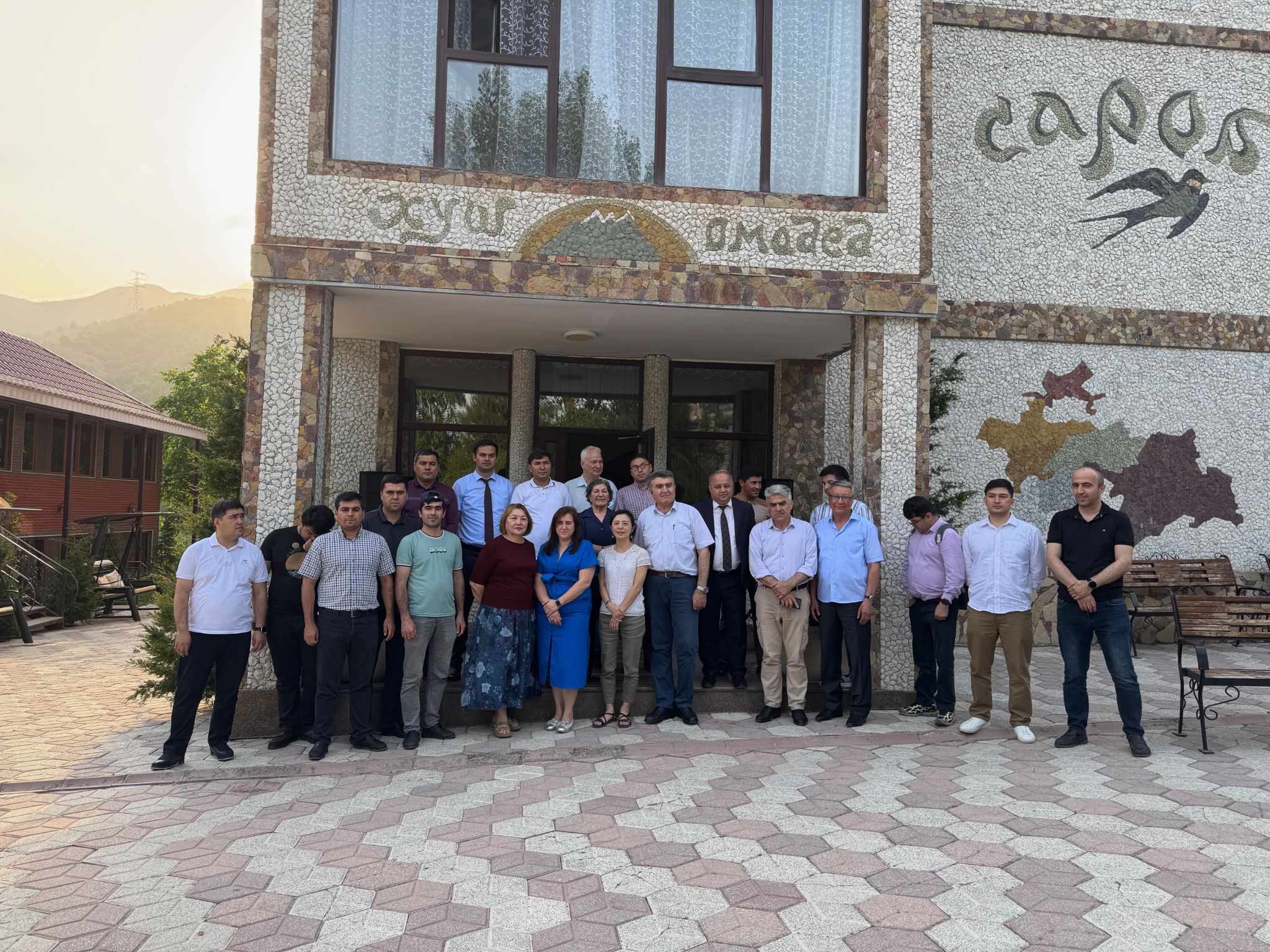
Sarob, Republic of Tajikistan
17 – 18 May 2025
Executive Summary
This document consolidates nine strategic pilot projects that were collaboratively designed and validated during the national workshop on AI integration, hosted by the Ministry of Education and Science (MoES). These pilot initiatives represent concrete, actionable steps toward achieving the national goals set forth in Tajikistan’s AI Strategy 2040 and the Concept for Transition to Digital Education 2042.
Each pilot is tailored to address specific institutional gaps and opportunities identified by MoES leadership and stakeholders. They include targeted interventions to enhance AI literacy among staff and educators, pilot AI-driven English learning tools, institutionalize AI leadership through structured learning, and deploy practical AI solutions—like custom ChatGPT assistants and real-time monitoring dashboards—for governance and educational improvement. Furthermore, innovative proposals on AI-supported science systems and stakeholder communication platforms strengthen MoES’s national and international positioning.
These pilots are not just proposals; they are the outcomes of collaborative analysis, expert input, and multisectoral engagement. They reflect a shared commitment to responsible, ethical, and high-impact AI adoption that enhances service delivery, boosts operational efficiency, and reinforces institutional credibility.
Purpose of Submission
The following pilot projects are submitted for MoES leadership review and endorsement. They are intended to serve as a foundation for phased implementation, inter-departmental coordination, and funding mobilization through national resources and international partnerships. Your approval and strategic guidance are requested to initiate the next phase: operational planning, partnership engagement, and resource alignment.
List of Content
Executive Summary 2
Pilot Project 1: AI Literacy for MoES Staff 4
Pilot Project 2: Piloting AI Tools for English Learning 5
Pilot Project 3 Qualifying 500 Teachers in AI Basics (In-Person Course) 6
Pilot Project 4: Online and Blended Learning Courses in AI Leadership 7
Pilot Project 5 Creating 30 Custom ChatGPTs for improved Productivity 8
Pilot Project 6 Regular Meetings with AI Leaders 9
Pilot Project 7 MoES Newsletter on AI in Education 10
Pilot Project 8 AI-Supported Roadmap and Monitoring for GPE Variable Part 11
Pilot Project 9: AI Support to Digital Science 12
Pilot Project 1: AI Literacy for MoES Staff
Background:
In alignment with Tajikistan’s AI Strategy 2040 and the Concept for Transition to Digital Education 2042, the Ministry of Education and Science (MoES) recognizes the need to equip its leadership and staff with foundational competencies in Artificial Intelligence (AI).
The "AI Literacy for Administrators" program is a 20-hour certificate course designed to address this gap by focusing on practical, administrative applications of AI in MoES and a cornerstone in the emerging ecosystem to strengthen AI leadership of the Ministry.
Objective:
To build AI literacy among MoES personnel through a structured, hands-on training program tailored to Tajikistan’s public administration context. This program emphasizes ethical, low-cost, high-impact applications of AI tools for tasks such as document management, communication, data analysis, and compliance.
Key Components:
• Structured Curriculum: Six modules covering AI basics, document handling, translation, data analysis, ethical AI use, and implementation strategies.
• Hands-On Learning: Use of open-source and offline-capable AI tools through practical exercises, case studies, and a capstone project.
• Local Relevance: Adaptation to low-connectivity environments and MoES administrative processes, with a focus on empowerment within a hierarchical institutional culture.
• Certification: Formal recognition through MoES-issued certificates upon successful completion of the course, quizzes, and capstone project.
Strategic Value:
This initiative lays the groundwork for institutional capacity building by enabling MoES staff to adopt AI tools responsibly and effectively. It supports strategic national objectives, promotes ethical standards, and prepares leadership to guide AI integration in education governance.
Timeline:
• Program Launch: Q3 2025
• First Cohort Completion: Q4 2025
• Rollout to All Departments: Q1 2026
Expected Outcomes:
• A certified cadre of AI-literate staff equipped to lead or support AI integration initiatives.
• Increased internal capacity for ethical AI adoption in administrative workflows.
• Strengthened alignment with the national digital transformation agenda and GPE reform frameworks.
Pilot Project 2: Piloting AI Tools for English Learning
Background:
In line with the Ministry's push for digital transformation and lifelong learning, English language proficiency has become a strategic priority across all departments. Artificial Intelligence (AI) can significantly accelerate language acquisition through personalized, adaptive, and scalable learning solutions. The use of AI-powered tools within a secure, monitored environment offers an opportunity to experiment with innovative approaches that improve communication and capacity building within the Ministry.
Objective:
To pilot the integration of AI tools into the Moodle Learning Management System (LMS), fostering a safe environment to experiment with human-centered language development and professional capacity building.
Key Components:
• Tool Selection: Identification and evaluation of AI-powered English learning tools with proven track records in personalization, adaptive feedback, and offline capability.
• Integration with LMS: Technical integration of selected tools within the Moodle LMS to ensure access, security, and scalability.
• Pilot Implementation: Execution of pilot across a representative cohort of staff, emphasizing usability, learning outcomes, and user satisfaction.
• Evaluation and Dissemination: Monitoring and evaluation to capture lessons learned, highlight success stories, and inform broader roll-out strategies.
Strategic Value:
This initiative will not only strengthen English language proficiency—a key skill for international collaboration—but also boost staff confidence in using AI technologies. It exemplifies how digital tools can support inclusive, responsive, and efficient governance in education.
Timeline:
• Launch of Pilot: Q3 2025
• Midterm Evaluation: Q4 2025
• Final Review and Scale-Up Plan: Q1 2026
Expected Outcomes:
• A curated set of AI tools for English learning tested and validated within the MoES context.
• Successful integration of AI language tools into the Moodle LMS.
• Improved language skills and digital literacy among participating staff.
• Documented lessons learned and best practices to guide future institutional adoption.
Pilot Project 3 Qualifying 500 Teachers in AI Basics (In-Person Course)
Background:
To advance digital and AI literacy at the classroom level, the Ministry of Education and Science (MoES) is launching a national teacher training initiative. This pilot aims to equip 500 educators across Tajikistan with foundational knowledge of artificial intelligence (AI) through a concise, accessible training program.
Objective:
To build basic AI awareness and capacity among school teachers by delivering a 6-hour in-person training that covers key AI concepts, ethical considerations, and practical classroom applications.
Key Components:
• Standardized Curriculum: Focused on what AI is, why it matters in education, and how it can support teaching and learning.
• Facilitator-Led Delivery: Delivered by a trained cadre of AI-literate MoES staff or partner educators across major regions.
• Practical Orientation: Emphasis on AI use-cases in teaching, including translation tools, adaptive learning, and assessment aids.
• Teacher Certification: Participants receive a MoES certificate of completion, contributing to their professional development record.
Strategic Value:
This pilot creates grassroots readiness for AI integration in classrooms, aligns with Tajikistan’s AI Strategy 2040 and the Concept for Digital Education 2042, and supports broader teacher professional development reforms under QESP II.
Timeline:
• Curriculum Finalization and Trainer Preparation: Q3 2025
• Training of 500 Teachers: Q4 2025 – Q1 2026
• Evaluation and Scaling Plan: Q2 2026
Expected Outcomes:
• 500 teachers trained and certified in AI basics.
• Increased awareness and confidence in AI-enhanced teaching practices.
• Foundation for a scalable national AI teacher development program.
• Strengthened teacher engagement in the digital transformation of education.
Pilot Project 4: Online and Blended Learning Courses in AI Leadership
Background:
To accelerate AI integration in governance, Tajikistan’s Ministry of Education and Science (MoES) must equip its leadership with practical AI competencies. Globally, a growing number of online and blended learning courses—such as the Generative AI for Leaders program by Google Cloud—offer accessible, low-cost training that bridges critical gaps in AI understanding, ethics, and strategic deployment within public sector organizations.
Objective:
To develop a cadre of MoES professionals with AI leadership competencies, using affordable and flexible online/blended learning courses aligned with the Ministry’s strategic goals.
Key Components:
• Course Identification and Alignment: Review and select internationally recognized online and blended AI leadership courses that match MoES reform priorities and digital transformation agenda.
• Course Enrollment and Support: Facilitate participation of MoES staff in selected programs, including provision of necessary technical support and coordination.
• Funding and Incentivization: Secure financial resources to cover course costs, including travel abroad, and consider incentives (certification bonuses, recognition) for successful completion.
• Institutional Embedding: Integrate course learnings into ongoing performance improvement and planning cycles through structured reflection sessions, internal peer-learning events, and leadership toolkits.
Strategic Value:
This pilot harnesses low-cost, globally benchmarked training as a sustainable pathway for institutional development. It offers a scalable solution to strengthen AI readiness and aligns with MoES’s goals for ethical, evidence-based decision-making and innovation.
Timeline:
• Pilot Launch: Q3 2025
• First Cohort Completion: Q4 2025
• Integration and Review: Q1 2026
Expected Outcomes:
• A group of certified MoES leaders equipped with core AI leadership skills.
• Greater institutional confidence in AI governance and decision-making.
• A model for cost-effective, high-impact professional development embedded in MoES systems.
Pilot Project 5 Creating 30 Custom ChatGPTs for improved Productivity
Background:
As part of its digital transformation and AI integration strategy, the Ministry of Education and Science (MoES) seeks to enhance internal decision-making and productivity by deploying domain-specific AI tools. This pilot focuses on building 30 custom ChatGPT instances tailored to key MoES departments and functions.
Objective:
To improve efficiency, consistency, and quality of decision-making within MoES by equipping staff with specialized AI assistants (custom ChatGPTs) that support routine analysis, content generation, and knowledge management.
Key Components:
Department-Specific AI Assistants: Custom ChatGPTs trained with departmental data and policy documents to support tasks like summarizing reports, drafting memos, and interpreting regulatory frameworks.
Open-Source & Low-Cost Architecture: Use of ChatGPT or comparable large language models (LLMs) with customizable knowledge bases, embedded securely within MoES infrastructure or cloud environments compliant with data protection standards.
User-Centric Interface: Simple web-based access for non-technical staff, with workflows optimized for different roles (e.g., curriculum officers, HR managers, planning staff).
Training & Governance: A train-the-trainer model to onboard staff, combined with usage policies to ensure ethical and secure application of generative AI.
Timeline:
• Design & Testing (10 models): Q3 2025
• Full Deployment (30 models): Q4 2025
• Integration with Routine Workflows: Q1 2026
Strategic Value:
This initiative empowers MoES departments to streamline internal workflows, reduce time spent on repetitive cognitive tasks, and enhance institutional memory. It fosters responsible AI usage, aligns with the national AI Strategy 2040, and introduces scalable practices for broader digital transformation.
Expected Outcomes:
• 30 operational, department-specific ChatGPTs in use across MoES.
• Measurable productivity gains in areas such as document drafting, policy review, and data querying.
• Increased staff capacity to interact with and guide AI tools in public administration contexts.
Pilot Project 6 Regular Meetings with AI Leaders
Background:
To build a sustainable and globally aware AI leadership culture, the Ministry of Education and Science (MoES) will institutionalize a monthly dialogue series. These sessions will engage thought leaders, innovators, and reform advocates to inform strategy, inspire innovation, and accelerate responsible AI adoption in education governance.
Objective:
To foster continuous learning and strategic alignment through structured monthly meetings between MoES leadership and external AI experts, start-up founders, and education reformers from Tajikistan and abroad.
Key Components:
Monthly Leadership Roundtables: Sessions focused on emerging AI trends, ethical challenges, education-sector use cases, and reform strategies.
Guest Speaker Series: Featuring national AI experts, international innovators, policy leaders, and entrepreneurs. Topics will be curated to align with MoES priorities and current reform milestones.
Knowledge Exchange Platform: Creation of an internal MoES portal to document, summarize, and share insights and recordings from each session for institutional learning.
Youth and Innovation Linkages: Periodic inclusion of AI students, start-up pitch showcases, and education innovation spotlights to stimulate cross-generational engagement.
Timeline:
• Program Launch: Q4 2025
• First 3 Sessions (Pilot Phase): Q4 2025 – Q1 2026
• Full-Year Program Implementation: Q2–Q4 2026
Strategic Value:
These monthly dialogues build strategic foresight, promote institutional openness, and support the culture shift necessary for AI governance. They also strengthen MoES connections with global innovation ecosystems and enable benchmarking with international best practices.
Expected Outcomes:
• Established calendar of 12 leadership sessions per year.
• Documented insights and takeaways to guide AI strategy and reform implementation.
• Strengthened partnerships with AI institutions, entrepreneurs, and education innovators.
• Elevated institutional confidence and readiness for global AI collaboration and alignment.
Pilot Project 7 MoES Newsletter on AI in Education
Background:
With the rapid evolution of artificial intelligence (AI) in education globally, the Ministry of Education and Science (MoES) requires a reliable internal communication tool to keep staff informed and engaged. This pilot introduces a monthly newsletter tailored to MoES departments, sharing curated insights, updates, and discussion points related to AI in education.
Objective:
To foster internal awareness, collaboration, and knowledge sharing on AI developments through a regularly published MoES newsletter focused on AI trends, applications, reforms, and international debates.
Key Components:
Monthly Digital Newsletter:cDistributed via internal email and available on the MoES intranet; designed for quick reading with links to deeper resources.
Curated Content: Includes global and national AI updates, featured tools or case studies, pilot project progress, interviews, and opinion pieces.
Contributions from Staff: Encourages short inputs from MoES staff, teachers, and AI training participants to share experiences and questions.
Editorial Team: A small internal team coordinates content collection, editing, and distribution with the support of the AI task force.
Timeline:
• Pilot Launch (First Issue): Q3 2025
• Initial Evaluation and Feedback Collection: Q4 2025
• Full Implementation and Quarterly Review: Q1–Q2 2026
Strategic Value:
The newsletter builds internal literacy, aligns departments with ongoing reforms, and fosters a culture of learning and reflection. It also supports transparency and collaboration around AI initiatives.
Expected Outcomes:
• Monthly issues published and distributed across MoES.
• Improved staff engagement and knowledge on AI developments in education.
• A platform for sharing best practices and amplifying voices within the ministry.
• Increased alignment across departments on AI reform priorities.
Pilot Project 8 AI-Supported Roadmap and Monitoring for GPE Variable Part
Background:
As part of the ongoing competency-based education (CBE) reforms, the Ministry of Education and Science (MoES) manages the GPE Variable Part (US$7.5M) to strengthen system capacity, enhance transparency, and improve learning outcomes.
Objective:
To deploy AI tools that enable the development of a dynamic roadmap and real-time monitoring dashboard to achieve Disbursement-Linked Indicators (DLIs) tied to GPE Variable Part financing.
Key Components:
AI-Enabled Roadmap: Logical framework aligned with the GPE results matrix and national strategies (NSED 2030, AI Strategy 2040).
Interactive Monitoring Dashboard: Real-time visual interface to track DLI progress, generate alerts, and support evidence-based decision-making.
AI Data Insights Engine: Automated analysis of learning assessments and stakeholder feedback to generate actionable insights.
Strategic Value:
This initiative enables MoES to shift from static reporting to dynamic, evidence-based leadership. It enhances data-driven decision-making, reinforces national ownership of education reforms, introduces a scalable model for AI in public governance, and demonstrates MoES’s readiness for a modern, data-enabled education transformation.
Timeline:
• Launch: Q3 2025
• Initial Results: Q4 2025
• First Use in LEG Reporting: Q1 2026
Expected Outcomes:
A foundational model for broader AI integration across MoES operations—delivering improved transparency, greater accountability, and enhanced preparedness for meeting GPE disbursement milestones.
Pilot Project 9: AI Support to Digital Science
Background:
The MoES has launched an initiative to establish a Unified National Database of Scientific and Pedagogical Personnel. This strategic effort aims to overcome the current fragmentation of information and promote data-driven management of scientific human resources. To accelerate development and funding mobilization, there is a pressing need for AI tools that can support proposal writing, content structuring, and promotion of the initiative both domestically and internationally.
Objective:
To deploy AI technologies that enhance the development, refinement, and dissemination of the Unified National Scientific Personnel Database proposal, ensuring its alignment with strategic objectives and increasing its likelihood of attracting funding and institutional support.
Key Components:
• AI-Enhanced Proposal Writing: Use generative AI to draft, refine, and localize proposal documents, leveraging global best practices in science policy and database design.
• Visualization and Promotion: Generate visual assets, summaries, and multilingual materials to support stakeholder engagement and donor communication.
• Strategic Alignment Engine: Match proposal language and structure to funding agency priorities (e.g., World Bank, EU, Islamic Development Bank), ensuring technical coherence and relevance.
• Content and Collaboration Platform: Use AI tools to organize contributions from stakeholders, track versions, and prepare high-impact presentations and policy briefs.
Timeline:
• Initiation and AI Tool Setup: Q3 2025
• Proposal Refinement and Submission: Q4 2025
• International Promotion and Outreach: Q1 2026
Strategic Value:
By integrating AI into proposal development, this initiative not only strengthens the quality and clarity of the science system proposal but also demonstrates MoES’s commitment to modern, digital-first governance. It models AI-supported innovation in public administration and enhances Tajikistan’s credibility in seeking international cooperation.
Expected Outcomes:
• A professionally developed, AI-supported proposal aligned with national and international expectations.
• Increased visibility of Tajikistan’s digital science reform agenda among partners and donors.
• Accelerated funding mobilization and stakeholder buy-in for the Unified National Scientific Personnel Database.
2