Document · English
AI literacy for administrators: 20-hour programme · EN
Download original“AI Literacy for Administrators”
A 20-Hour Certificate Program
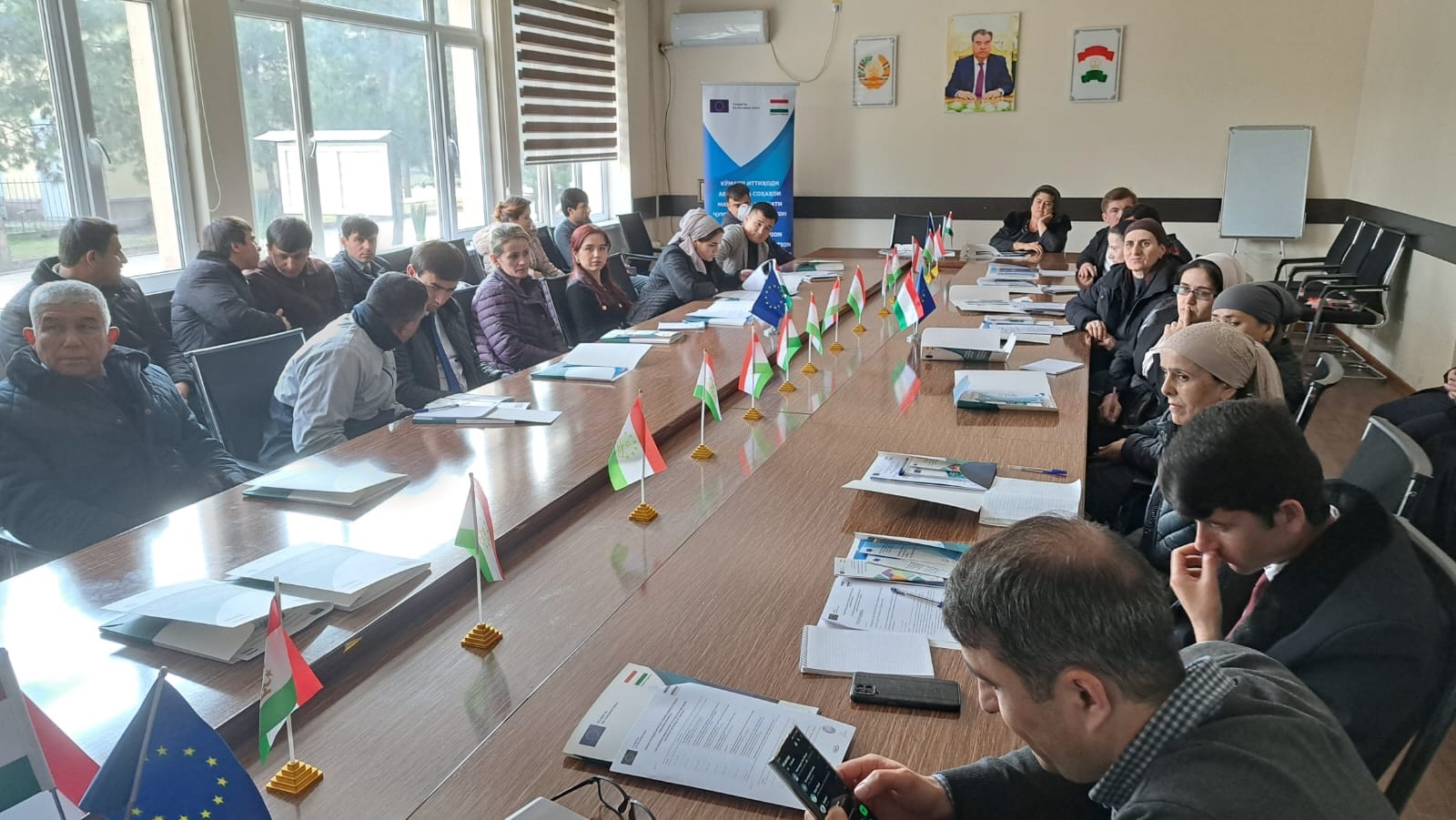
prepared for the workshop of the
Ministry of Education and Science of the Republic of Tajikistan
Building Leadership Capacity
for AI Integration
Sarob, Republic of Tajikistan
17 – 18 May 2025
Contact Information:
📧 info_qesp2pro@eductrade.com
🌐 https://maorif.tj/projects/qesp2/news
This publication was produced with the financial support of the European Union. Its contents are the sole responsibility of the consortium led by Eductrade and do not necessarily reflect the views of the European Union.
Executive Summary
🎯 Objective
To equip MoES staff with practical, hands-on knowledge of artificial intelligence for administrative purposes, aligned with Tajikistan’s AI Strategy 2040 and Digital Education Concept 2042. The program focuses on low-cost, high-impact AI tools for improving workflows, document handling, communication, and data analysis within public administration.
📚 Course Structure (6 Modules | 20 hours)
• Intro to AI in Public Administration
Basics of AI, relevance to Tajikistan, and public sector use-cases.
• AI for Document Management & Compliance
Summarization, classification, and policy compliance tools.
• AI for Communication & Translation
Multilingual translation, meeting notes, and email drafting using AI.
• AI for Data Analysis & Reporting
Using AI to interpret data, create visual reports, and identify trends.
• Ethical & Human-Centered AI Use
GDPR-aligned practices, bias detection, and responsible AI adoption.
• Implementing AI in Government
Pilot design, change management, stakeholder engagement, final capstone project.
🛠 Learning Methods
• Interactive Moodle platform
• Hands-on activities with open-source AI tools (ChatGPT, translators, dashboards)
• Case studies, group work, quizzes, and ethical simulations
• Final project: AI pilot proposal aligned with MoES priorities
📜 Certification Requirements
• Completion of all modules and assignments
• ≥70% average across quizzes
• Capstone project submission and final evaluation
• Printed certificate issued by MoES
🧩 Local Context Emphasis
• Offline-capable tools for low-connectivity environments
• Focus on translation and compliance automation
• Ethical AI aligned with Tajik law and EU standards
• Staff empowerment within a hierarchical administrative culture
🔗 Supported by
European Union | Eductrade-led Consortium | MoES of Tajikistan
“Not just learning AI — leading with it.”
List of Contents
EXECUTIVE SUMMARY
INTRODUCTION
CURRICULUM OUTLINE (MODULES AND KEY TOPICS)
MODULE 1: INTRODUCTION TO AI IN PUBLIC ADMINISTRATION (3 HOURS)
MODULE 2: AI FOR DOCUMENT MANAGEMENT AND COMPLIANCE (4 HOURS)
MODULE 3: AI FOR COMMUNICATION AND TRANSLATION (3 HOURS)
MODULE 4: AI FOR DATA ANALYSIS AND REPORTING (3 HOURS)
MODULE 5: ETHICAL, SAFE, AND HUMAN-CENTERED AI USE (3 HOURS)
MODULE 6: IMPLEMENTING AI IN GOVERNMENT – STRATEGY, CHANGE MANAGEMENT & FINAL PROJECT (3–4 HOURS)
CERTIFICATION CRITERIA & PROGRAM COMPLETION
Introduction
This 20-hour certificate course (delivered in Tajik via the MoES Moodle platform) builds foundational AI literacy for government administrators, focusing on practical administrative applications of AI.
The curriculum is tailored to Tajikistan’s context – acknowledging limited digital infrastructure, hierarchical (“command”) structures, and the national strategic goals outlined in the National AI Development Strategy 2040 and the Concept for Transition to Digital Education.
Through 6 modules of interactive content (readings, videos, and hands-on exercises) and assessments, participants learn to leverage low-cost, high-impact AI tools for tasks like document review, compliance monitoring, translation, meeting summaries, and reporting. Ethical use, data protection (in line with GDPR-like standards), and human-centered design are emphasized throughout. Participants who complete all modules and pass evaluations will receive an official printed certificate issued by MoES.
Curriculum Outline (Modules and Key Topics)
• Introduction to AI in Public Administration (Fundamentals & Tajikistan Context): What is AI, key concepts (machine learning, NLP, etc.), examples of AI in government services, Tajikistan’s National AI Strategy vision (5% of GDP from AI by 2040), and the Digital Education Concept goals.
• AI for Document Management and Compliance: Using AI to summarize documents, review policy papers, classify information, and monitor compliance with regulations. Hands-on with document summarizers and AI-assisted policy compliance checks.
• AI for Communication and Translation: Tools for automatic translation (e.g. between English–Tajik–Russian), AI chatbots or assistants for meeting scheduling and Q&A, and AI-generated meeting minutes and summaries.
• AI for Data Analysis and Reporting: Leveraging AI to analyze data and generate reports – e.g. using simple predictive tools for trends, automating routine data aggregation, creating visualizations or draft narratives from spreadsheets.
• Ethical and Human-Centered AI Use: Principles of ethical AI (human agency, fairness, transparency), data privacy/protection (drawing on EU GDPR principles), addressing bias, and ensuring AI augments human decision-making rather than replaces it. Local laws and international best practices (EU Trustworthy AI guidelines, UNESCO recommendations) are discussed.
• Implementing AI in Government – Strategy and Next Steps: Change management in a legacy bureaucracy; aligning AI projects with policy (e.g. e-government initiatives); overcoming infrastructure constraints; selecting open-source or low-cost solutions; pilot projects and scaling. Includes the future outlook for AI in Tajikistan’s public sector and how to continuously upskill.
Each module is described in detail below, including learning objectives, content & materials, practical tools/activities, and assessment items.
Module 1: Introduction to AI in Public Administration (3 hours)
Description: This module introduces the basics of artificial intelligence and its relevance to government administration. It contextualizes AI within Tajikistan’s strategic vision and institutional reality. Participants will learn foundational concepts and see real-world examples of AI improving public services.
Learning Objectives
• Define artificial intelligence (AI) and related terms (machine learning, algorithms, NLP) in simple language.
• Identify at least 3 current uses of AI in government/public sector (e.g. automating customer inquiries, data analysis).
• Understand Tajikistan’s National AI Strategy 2040 goals (e.g. AI contributing 5% of GDP by 2040) and how AI ties into national priorities.
• Recognize challenges in Tajikistan (limited internet, few AI specialists) and the need for capacity building.
• Articulate how AI can help address administrative tasks without replacing human judgment (AI as a support tool).
Content & Materials
• Reading: “AI Basics for Policy Makers” – a beginner-friendly overview of AI concepts and examples in the public sector (e.g. chatbots for citizen services, data dashboards).
• Reading: Excerpts from Tajikistan’s National Strategy for AI 2040 (unofficial English translation) highlighting the vision for AI in education and e-government. (These excerpts link AI development to improved public services and education.)
• Reading: Summary of the Concept for Transition to Digital Education (2042) – focusing on digital integration in education and the push for ICT infrastructure.
• Video: “AI 101: What is Artificial Intelligence?” – a 5–10 minute YouTube explainer suitable for a non-technical audience (covers basic definitions and examples).
• Case Study: One short success story of AI in government from another country – e.g. Estonia’s e-government AIor India’s translation AI for government documents – to inspire possibilities.
• Discussion Prompt: “What administrative process in your daily work could be improved by quicker data processing or automation?” (Think-pair-share on Moodle forum to get participants considering AI use-cases in their context.)
Practical Tools & Activities
• Demonstration: Live demo of a simple AI chatbot (for example, an FAQ bot on a government website) to show how AI can handle common queries. Participants can watch or try querying the bot with a question.
• Activity: AI Jargon Bingo – participants get a bingo card of key AI terms (algorithm, dataset, model, bias, etc.) and mark them off as they appear in the module’s video/reading. This keeps the session interactive and ensures they catch important terms.
• Group Exercise: Using an online concept mapping tool, small groups draft a mind map of “AI Opportunities in MoES Administration” – placing ideas like “automate report summaries”, “analyze school statistics”, etc., and share their maps via Moodle.
Assessment
• Quiz (Multiple Choice & True/False): Sample items:
• True/False: “AI can only refer to humanoid robots that think like humans.” (Expected answer: False – clarify AI includes many applications from text analysis to prediction, not just human-like robots.)
• Multiple Choice: “Which of the following is NOT an example of AI in public administration?
A) A system that automatically categorizes citizen feedback emails by topic.
B) Software that randomly deletes old government data to free storage.
C) A chatbot that answers citizens’ questions about school enrollment.
D) A translation tool that converts laws from Russian to Tajik.” (Correct answer: B – that’s not an intelligent or goal-directed task, just a destructive one.)
• Reflective Short Answer: “According to Tajikistan’s National AI Strategy, why is it important for civil servants to learn about AI now?” (Learners should mention goals like boosting efficiency, meeting the Strategy’s targets, modernizing services, etc., possibly referencing the Strategy’s emphasis on training human capacity.)
Module 1 Completion Criteria: View all materials, contribute one post to the discussion, and score at least 70% on the quiz.
Module 2: AI for Document Management and Compliance (4 hours)
Description: This module dives into practical AI tools for handling large volumes of text and documents – a common administrative task. Participants will learn how AI can rapidly summarize reports, extract key points, classify documents, and help check for compliance with guidelines or policies. The module addresses real scenarios like reviewing school reports or policy documents under time constraints, using AI as a “digital assistant” to save time while maintaining accuracy.
Learning Objectives
• Use AI tools to summarize long documents (e.g. policies, reports) into key points or executive summaries.
• Employ AI to extract specific information or keywords from documents (e.g. find all mentions of “budget” or “attendance targets” in a report).
• Understand how AI can assist in compliance monitoring – e.g. checking if a report adheres to required format or contains all necessary sections.
• Identify at least one open-source or low-cost document analysis tool suitable for use in a low-infrastructure setting (e.g. offline text analysis software).
• Recognize the limitations of AI in document review (e.g. potential errors or “hallucinations,” need for human verification, issues with poor-quality scans).
Content & Materials
• Reading: “Automating Document Workflows” – an article on how AI is used for document review in government and legal fields, with emphasis on speeding up review while reducing errors. This reading introduces concepts like optical character recognition (OCR) and natural language processing for entity extraction.
• Guide/Manual: “How to Summarize Text with AI” – a step-by-step guide (with screenshots) on using a freely available tool (e.g. ChatGPT or an open-source summarizer) to condense a long text. It includes an example using a mock 10-page policy document and shows the before-and-after summary.
• Example Document: A sample education policy document (3-5 pages excerpt) provided to participants. They will use this in activities to practice summarization and compliance checking.
• Case Snippet: A brief description of how a neighboring country’s education ministry used AI to flag inconsistencies in school reports (illustrating compliance use-case, e.g. an AI system that flagged schools missing certain financial disclosures – purely hypothetical but relatable).
• Video: “AI for Document Management” – a short (5 min) explainer video showing tools that automatically generate meeting minutes and scan text for key phrases. It may demonstrate a tool highlighting policy compliance (e.g., checking if all required sections are present in a document).
Practical Tools & Activities
• Hands-On Exercise: Document Summarization Practice. Using either an online demo (if internet is available) or an offline tool provided in the course, participants will summarize the sample policy document. For instance, they might use a web-based AI summarizer or paste text into ChatGPT with a prompt. Each participant produces a one-paragraph summary and shares it on the forum. They compare the AI-generated summaries to the original to see what was captured or missed.
• Compliance Checklist Simulation: Participants are given a compliance checklist (a list of items that a school’s report must include per MoES guidelines). Then, using either an AI tool or manual review augmented by search (e.g. Ctrl+F or an AI Q&A tool), they determine if a provided sample school report meets all criteria. For example, does the report mention “budget utilization”? “teacher training activities”? etc. The AI tool could be a simple script or even using a QA prompt like “Does this text mention X?”. Participants mark compliance gaps. (This activity simulates how AI could quickly scan for required content.)
• Group Reflection: Discuss in groups: “How comfortable would you be trusting an AI summary or compliance check? What steps would you take to ensure its accuracy?” This encourages thinking about verification and human oversight.
Assessment
• Quiz (Multiple Choice & Fill-in): Sample items:
• Multiple Choice: “Which task is least suited for AI in document management?
A) Summarizing a 50-page report into key bullet points.
B) Automatically translating a policy from English to Tajik.
C) Reading a handwritten note from a meeting and understanding it perfectly.
D) Scanning multiple reports to find specific keywords (like ‘attendance rate’).” (Correct: C – AI struggles with handwriting recognition unless very clear, and even then understanding context is hard; other tasks are feasible with AI.)
• Fill-in-the-blank: “An AI-based OCR tool is used to convert scanned paper documents into ______ text that can be searched and analyzed.” (Expected: “digital” or “machine-readable”).
• Multiple Choice: “One benefit of using AI for compliance monitoring in reports is:
A) The AI can guarantee 100% that a document meets all legal requirements without human input.
B) The AI can quickly flag sections that might be missing or non-compliant, saving officials time.
C) AI systems require no maintenance once set up.
D) Using AI means we no longer need human auditors.” (Correct: B – AI can flag issues to help humans, but options A, C, D are misconceptions.)
• Practical Assignment: Participants upload a short summary they generated from the sample document (or another document from their work, if feasible) along with a one-paragraph commentary: “How did the AI summary compare to what you would have written? What would you adjust before using it in an official context?” – This write-up is graded on understanding of AI’s strengths and weaknesses.
Module 2 Completion Criteria: Participants must submit the practical assignment and score at least 60-70% on the quiz. They should also demonstrate in their summary commentary that they can critically evaluate an AI output (this ensures they aren’t blindly trusting AI).
Module 3: AI for Communication and Translation (3 hours)
Description: Module 3 focuses on AI tools that enhance communication, especially in a multi-lingual government context. Tajikistan’s administrators often work with documents and meetings in Tajik, Russian, and English – AI can bridge language gaps via translation, and streamline communication through automated meeting notes and email drafting. This module introduces machine translation, speech-to-text, and summarization tools for meetings and correspondence. Participants will practice translating texts and generating meeting summaries, while discussing quality, accuracy and confidentiality concerns.
Learning Objectives
• Translate text between English, Tajik, and other languages using AI translation tools, and evaluate the accuracy of these translations.
• Utilize speech-to-text or transcription AI to convert spoken words (from meetings or interviews) into written form, and then summarize the content.
• Experiment with AI tools that generate or assist in writing emails, memos, or meeting minutes, to see how they can save time in daily communication tasks.
• Understand best practices and limits of machine translation (e.g. handling of official terminology, the need for human proofreading, risks of sensitive data in free translators).
• Recognize ethical considerations in using AI for communication – such as maintaining confidentiality (not inputting private meeting records into public tools) and avoiding mistranslations that could alter meaning.
Content & Materials
• Reading: “Overcoming Language Barriers: AI in Translation” – an overview from an international organization (e.g. UNESCO or EU) on using machine translation in government. It highlights that tools like Google Translatenow support many languages including Tajik, but quality must be checked by bilingual staff (note: UNESCO emphasizes AI should support, not replace human oversight).
• Demo/Website: Link to Google Translate or a similar free translation service with Tajik language support, and instructions on how to use it for documents (e.g. copy-pasting text vs. uploading a document). Also mention offline translation options (like Google Translate mobile app offline mode) given intermittent internet in some offices.
• Tool Spotlight: “EU’s eTranslation and Open-Source Translators” – a short description of European Commission’s free eTranslation tool (if accessible to Tajikistan via EU programs) and open-source alternatives. Emphasize EU support for multilingual tech and data privacy.
• Video: “AI for Meetings and Notes” – a brief video showing how an AI meeting assistant works. For example, it could illustrate an AI that, given an audio recording of a meeting, produces a summary and action item list. This can be exemplified by a commercially available tool or an open-source project (the video could be sourced from a vendor demonstration, but it’s for concept not endorsement).
• Example Document/Audio: A sample meeting transcript (or a 2-minute audio clip with an accompanying transcript) of a hypothetical MoES meeting (in English or with translation). It includes multiple speakers and decisions. This will be used for the practical exercise.
• Tip Sheet: “Using AI Communication Tools Responsibly” – one page of dos and don’ts (e.g. DO use translation for initial drafts, DON’T use it for secret documents; DO double-check AI-translated figures or names; DO maintain human review of important emails drafted by AI, etc.). This can integrate EU data protection advice (like ensuring compliance with privacy laws when using cloud AI).
Practical Tools & Activities
• Translation Exercise: Participants take a paragraph of text (provided in English, perhaps an official announcement or a policy summary) and use an AI tool to translate it into Tajik (or vice versa). For example, a sentence like “All schools must submit their annual report by October 1” in English should come out in Tajik accurately. They then review and edit the AI translation, noting any errors or awkward phrasing. This could be done in pairs if some are more fluent in both languages, to encourage peer review. The expected outcome: participants see that while the AI translation is a huge help, it might miss context (e.g., proper nouns, formal tone) that they need to fix.
• Meeting Summary Activity: Using the provided meeting transcript, participants either manually or with an AI tool (if available via a provided script or online service) generate a meeting summary. For instance, if the transcript is text, they can paste it into an AI summarizer with a prompt like “Summarize the key decisions and action items from this meeting.” If an audio is provided and internet allows, they could try a speech-to-text demo first. They then compare their summaries in small groups against a model summary. Discussion questions: Did the AI miss any important detail? Did it add anything that wasn’t said (hallucination)? How would you use such a tool for your own meeting notes?
• Drafting Emails: An optional interactive exercise – participants are given a scenario: “Write an email to school principals reminding them of a new policy, in a polite and clear tone.” They first outline the key points manually, then see how an AI (like ChatGPT) would draft it by providing a prompt. They evaluate which phrases or structure from the AI output are useful and which need tweaking to fit official style. This builds confidence in using AI as a writing assistant.
Assessment
• Quiz (Scenario-based Questions): Sample items:
• Multiple Choice (Scenario): “You need to translate a confidential memo from Tajik to English to send to an international partner. Which approach is most appropriate?
A) Copy-paste the entire text into a free public translation website immediately.
B) Use a secure or offline translation tool, then have a bilingual colleague review the output.
C) Just send it in Tajik; the partner should translate themselves.
D) Rewrite the memo from scratch in English without any tools.” (Correct: B – uses AI but with security and human review. A is risky for privacy, C and D may not be practical or efficient.)
• True/False: “AI transcription and summary tools can completely eliminate the need for human meeting minutes takers.” (Expected answer: False – they can assist and speed up the process, but human oversight is needed to ensure accuracy and context.)
• Short Answer: “After using Google Translate on a paragraph of text, you notice the word ‘вазират’ (ministry) was translated incorrectly. What should you do next before sending the translation out officially?” (Expected: Manually correct the specific term, and review the rest of the translation for any other errors – emphasizing that human review is essential.)
• Practical Assignment: Participants submit a translated paragraph with their corrections (showing the original AI output vs. their edited version) OR a short meeting summary they refined. They also write 2-3 sentences on how the tool helped and what they had to fix. Grading will consider their ability to spot errors and improve the AI-generated content, demonstrating understanding of both utility and fallibility of AI.
Module 3 Completion Criteria: Complete the translation or summary assignment with a satisfactory quality (e.g. corrected major errors, demonstrated understanding of context) and score at least 70% on the quiz. Active participation in the exercises (e.g. posting the summary to forum) is also expected.
Module 4: AI for Data Analysis and Reporting (3 hours)
Description: In this module, participants explore how AI can assist in analyzing data and generating reports – key tasks for planning and monitoring in education administration. The focus is on low-cost, user-friendly tools that can help make sense of numerical data (e.g. school performance metrics) and create reports or visualizations. Given Tajikistan’s limited access to expensive analytics platforms, the module emphasizes open-source solutions and simple AI functionalities (like spreadsheet-based AI plugins or free online dashboards). Participants will learn how AI can find patterns or outliers in data, and even draft narrative insights (for example, automatically highlighting a drop in enrollment in a region). The importance of data quality and human verification of AI-generated analysis is underscored.
Learning Objectives
• Interpret how AI can quickly analyze datasets (e.g. exam scores, attendance records) to find trends, outliers, or correlations that administrators should know.
• Use basic tools (such as Excel or Google Sheets with AI add-ons or simple statistical AI tools) to perform tasks like forecasting or detecting anomalies in data (e.g. flagging schools with unusually low performance for follow-up).
• Understand what natural language generation (NLG) is – AI that writes human-readable summaries from data – and see it applied in creating a draft report or summary.
• Identify at least one open-source or freely available data analysis tool suitable for the Ministry’s context (for example, an open-source BI tool or Python notebook template) and know what kind of support/expertise it would require.
• Acknowledge the prerequisites for effective AI in data analysis: reasonably clean data, clear objectives, and human expertise to interpret the results (AI is not a magic wand for bad data).
Content & Materials
• Reading: “Data-Driven Decisions: AI in Government Analytics” – an article or report excerpt (e.g. from OECD or World Bank) discussing how governments use AI for insights, such as identifying fraud, allocating resources, or predicting needs. It might mention examples like systems that predict which schools are at risk of low exam pass rates so officials can intervene.
• Tutorial: “Using Spreadsheets for AI-Powered Analysis” – a hands-on tutorial that shows how to use a familiar tool (Excel or Google Sheets) with some AI capability. For example, Google Sheets’ Explore feature or an Excel plugin can answer natural language questions about data (like “What was the average attendance in 2024 by region?”) or suggest charts. The tutorial uses a dummy dataset (perhaps a small set of school statistics) to demonstrate asking questions and generating a chart.
• Example Dataset: A simplified dataset of school indicators (in CSV or spreadsheet form) – containing columns like school name, enrollment, exam pass rate, number of teachers, etc., for a set of schools or districts. This will be used for exercises.
• Video: “From Data to Narrative: NLG in Action” – a 3-4 minute video demonstrating an AI system that takes data and produces a short written summary (for instance, a system that writes a few sentences of analysis, e.g. “Region A’s enrollment increased by 5% this year, outperforming Region B which saw a 2% decrease.”). This could be an example from a news automation or a BI tool’s narration feature.
• Reference: Link or excerpt from the EU AI Handbook for Civil Servants or similar resource, focusing on open-source tools. (If available, an EU publication that lists recommended software or frameworks for governments could be cited, showing alignment with EU-supported standards and avoiding vendor lock-in.)
Practical Tools & Activities
• Data Exploration Exercise: Using the provided school dataset, participants will practice asking questions and getting insights. If using Google Sheets, they might use the Explore function: e.g., type a question “What is the average exam pass rate?” and see the answer or chart. If offline, an instructor might provide an AI-assisted Excel template with pre-built functions or a simple script to identify max/min values or trends. Participants should identify one interesting insight (e.g. “School X has the highest enrollment but one of the lowest pass rates”) and share it on the forum.
• Visualization Activity: Participants create a quick chart (manually or with AI suggestions) based on the data – for example, a bar chart of pass rates by district. They can use any provided tool or just the spreadsheet. Then, they write one sentence interpreting the chart. (This develops their ability to pair data with narrative, a step toward using NLG tools.)
• Mini-Report Drafting: A simulation where an AI writes a narrative from data. For instance, the facilitator might provide a pre-generated 1-paragraph AI-written summary of the dataset trends. Participants must critique and edit this paragraph for clarity and correctness. If possible, this could be done by actually using an NLG tool or by giving them a “rough draft” that resembles AI output. They will see things like overly generic statements or misemphasis that they can improve.
• Group Discussion: “What data in your department could be better utilized with an AI tool, and what would you need to make it happen?” – Groups discuss practical considerations (maybe one group says “teacher attendance data – we’d need tablets for schools to record data, plus training on using the analysis tool”).
Assessment
• Quiz (Matching & MCQs): Sample items:
• Matching: Match each AI capability to its example:
• Anomaly detection – a. “The system flags School #5 for an unusual drop in attendance this month.”
• Forecasting – b. “The system predicts next year’s enrollment based on trends.”
• Natural Language Generation – c. “The system writes: ‘Overall, attendance improved by 3% this quarter.’”
(Correct matching: 1-a, 2-b, 3-c.)
• Multiple Choice: “You have a spreadsheet of 500 schools’ data. What is a quick way to identify the 5 schools with the lowest teacher-to-student ratio?
A) Sort the data by the ratio column and look at the top 5.
B) Manually read through and find them.
C) Use an AI tool to highlight outliers or ask it in natural language.
D) Both A and C could work.” (Expected: D – sorting is a basic method, and AI could assist by quickly pointing out outliers as well.)
• Multiple Choice: “Which statement about AI in data analysis is TRUE?
A) AI can find patterns in data much faster than a human, but might also find patterns that are meaningless (“spurious correlations”).
B) AI will always provide correct interpretations of data without oversight.
C) If data is incomplete or biased, AI tools can still give accurate insights.
D) Using open-source AI tools in government is discouraged by EU standards.” (Correct: A – highlights speed vs need for human sense-making; B and C are false, D is false as EU often encourages trustworthy and open solutions.)
• Practical Assignment: Given a small dataset (provided, similar to class example), each participant must write 3 sentences of analysis as if for a report, using either their own observations or with the aid of an AI hint. For example: “In 2025, Region X’s student enrollment grew 4%, the highest in the country, while teacher numbers only grew 1%. This could indicate a growing class size issue in Region X, whereas Region Y... etc.” They should also note if they used any tool (even a simple Excel function) to reach this insight. This tests their ability to turn data into actionable info – a key admin skill enhanced by AI.
Module 4 Completion Criteria: Submission of the mini-analysis (with coherent, evidence-based sentences) and a passing grade on the quiz. The analysis write-up should show they can derive a meaningful point from data (with or without AI help) and are aware of the context (not just blindly trusting a number).
Module 5: Ethical, Safe, and Human-Centered AI Use (3 hours)
Description: This module addresses the critical ethical and governance aspects of using AI in government. Building AI literacy isn’t just about tools – administrators must understand the ethical implications, data protection requirements, and the importance of keeping humans in the loop. Module 5 covers the guiding principles (drawing from EU’s human-centric AI approach and UNESCO recommendations) that ensure AI is used responsibly and for public good. It tackles issues of bias, transparency, privacy, and accountability. Participants will learn about relevant laws (e.g. data protection policies akin to GDPR) and how to apply ethical guidelines in everyday scenarios – for example, knowing when an AI’s decision should be reviewed by a person, or how to handle data securely. The module also connects to Tajikistan’s context: the need to establish ethical frameworks as noted in the national strategy and the realities of limited resources (ensuring AI efforts don’t detract from solving basics like connectivity).
Learning Objectives
• Recall key principles of ethical AI (such as transparency, accountability, non-discrimination, human oversight) as defined by international standards (EU Trustworthy AI Guidelines, UNESCO AI Ethics Recommendation, etc.).
• Explain the importance of data privacy and protection when using AI, identifying what kind of data can/cannot be fed into external AI tools (e.g. personal student data, sensitive government info).
• Identify examples of bias in AI and describe how bias can appear in administrative contexts (e.g. if an AI system is trained on data not reflective of certain regions or groups, it might give skewed results).
• Determine situations where human judgment should override AI – e.g. when an AI’s suggestion in hiring or school resource allocation needs review to ensure fairness.
• Understand Tajikistan’s steps toward AI governance: the need to develop legal frameworks and capacity for AI oversight, and how to align with global best practices despite resource constraints.
Content & Materials
• Reading: “Ethical AI: A Public Sector Primer” – a concise summary of the EU’s Ethics Guidelines for Trustworthy AI (2019) focusing on the seven key requirements (human agency, privacy, transparency, etc.). It translates those concepts into everyday language and examples relevant to government use (e.g. transparency = citizens should know when they’re interacting with an AI chatbot vs a human).
• Reading: Excerpt from UNESCO’s Recommendation on the Ethics of AI (2021) – highlighting points on equity and inclusion. Possibly include the notion: AI in education should “prioritize human well-being and autonomy, and resources for AI should be additional and not detract from solving fundamental challenges like access to electricity and the internet.” – a statement highly relevant in Tajikistan’s context of basic infrastructure needs.
• Case Study: “When Algorithms Go Wrong” – a short description of a real or hypothetical case of AI misuse in government (for example, a scenario where an automated decision system caused an unfair outcome, like improper distribution of public benefits due to biased data). This could be drawn from international examples to illustrate the stakes.
• Legal Reference: Summary of data protection laws applicable (note: Tajikistan might not have a GDPR-equivalent yet, but we can reference its commitments or draft laws, or simply best practices). Also mention any existing MoES data policies for student/teacher data. If none, align with EU GDPR as a gold standard: personal data must be handled with consent, kept secure, etc.
• Video/Podcast: A short interview or talk (5 min) with an expert (maybe an EU or local expert) on “Human-Centered AI in Education/Government” – emphasizing that AI should augment human work, not replace it, and how to involve stakeholders (teachers, officials) in AI adoption to build trust.
• Checklist/Guideline: “AI Ethics Checklist for Administrators” – a one-page checklist that participants can use when planning or evaluating an AI tool: e.g. Is the purpose legitimate and beneficial? Are we avoiding any sensitive personal data? Do users know an AI is being used? Is there a process if the AI makes a mistake? etc. This can be a simplified adaptation of EU/OECD ethical AI checklists.
Practical Tools & Activities
• Scenario Role-play: Participants are given a scenario: The Ministry is rolling out an AI system that predicts which schools are likely to underperform. This system uses past exam data and socio-economic indicators. In small groups, they role-play as an “Ethics Committee.” Their task: identify potential ethical issues and suggest mitigations. For example, one group might say: “Bias – schools in poorer areas might be flagged more often; mitigation: ensure additional context or human review for those cases.” Another: “Transparency – inform school principals that this is a predictive aid, not a final verdict on their performance.” Each group presents one issue and solution.
• Data Privacy Exercise: A quick activity where participants classify types of data as High Risk vs. Low Risk to share with AI tools. For instance: student names/IDs (High – personal data), aggregated enrollment numbers (Low – non-personal summary), draft policy document text (Low, if not confidential), detailed health info of staff (High – sensitive personal data). The trainer can show a slide or handout with items, and participants raise cards or vote which category each falls into. This reinforces understanding of what must be protected.
• Bias Detection Brainstorm: Show participants an example output from an AI (could be fictional) that inadvertently reflects bias – e.g. an AI summarizer that always focuses on data from urban schools more than rural ones. Ask: “Why might this be happening? How would you check if an AI tool is treating all schools fairly?” They might respond: the training data had mostly urban examples, so it’s less tuned to rural context; one would test the tool on various inputs (some from GBAO region, some from Dushanbe) to see if results differ systematically. This thought exercise makes them aware that they need to test AI tools for fairness, especially in a diverse country.
• Personal Reflection: Each participant writes a short pledge or plan: “In my role, when I use an AI tool, I will ensure ethical use by doing X.” For example, “I will double-check AI-generated reports for accuracy and fairness before forwarding” or “I will not upload sensitive data to external AI services.” They can share some of these pledges on the forum to encourage collective commitment to ethical standards.
Assessment
• Quiz (Multiple Choice & True/False): Sample items:
• Multiple Choice: “Which of the following aligns with a human-centered approach to AI in our Ministry?
A) Using AI to make final decisions on teacher hiring with no human input.
B) Having AI provide recommendations on resource allocation which officials review and approve.
C) Removing human staff and letting an AI system run an entire process autonomously because it’s more efficient.
D) Not implementing AI at all because it can make mistakes.” (Correct: B – AI in an assistive role with human oversight; A and C violate human-in-the-loop and could be risky/unethical, D misses the potential benefits.)
• True/False: “If an AI tool we use is open-source and free, we don’t need to worry about data protection when using it.” (Answer: False – even open-source tools require careful handling of data; data protection is always a concern regardless of tool cost.)
• Multiple Choice: “AI bias can occur because:
A) The data used to train the AI reflects existing biases.
B) The AI is intentionally programmed to discriminate.
C) AI never has bias; it is always neutral.
D) Only if the AI is used in Western countries, not in Tajikistan.” (Correct: A – biased data leads to biased AI. B is possible but less common; C is false; D is false – bias can occur anywhere data has patterns of bias.)
• Short Answer: “List two actions you should take if an AI tool makes a recommendation that seems unfair to a certain group (e.g. remote schools):” (Expected points: e.g. Investigate the data or reasoning the AI used (transparency), involve diverse experts to check the fairness, adjust the algorithm or thresholds if needed, or override the AI decision in that case and report the issue.)
• Assignment/Case Analysis: Participants are given a short hypothetical case (a paragraph) describing an ethical dilemma: e.g. “The Ministry’s new AI scheduling tool is saving time but staff noticed it schedules fewer training sessions in rural districts than urban ones.” They must write a brief response (5-6 sentences) on how they would address this. In their answer, they should identify a possible cause (bias or data issue), an ethical concern (equity), and a remedy (e.g. review the algorithm or ensure rural data is weighted, maintain human check). This open-ended response is graded on understanding of ethical principles and practical problem-solving.
Module 5 Completion Criteria: Pass the quiz (with emphasis on key principles mastered) and submit a satisfactory case analysis. The case response should demonstrate the participant can apply ethical thinking to a real situation.
Module 6: Implementing AI in Government – Strategy, Change Management & Final Project (3–4 hours)
Description: The final module brings it all together, focusing on how to practically implement AI solutions in the MoES or other government bodies. It covers strategic alignment (making sure AI projects support the National AI Strategy and digital education goals), stakeholder buy-in, and managing change in a traditional bureaucracy. Participants will learn about project planning for AI initiatives, including choosing appropriate low-cost, high-impact tools that fit local constraints (possibly with donor or EU support). They will also explore how to measure success (KPIs for AI projects) and sustain these initiatives. A key component is the final evaluation: participants will either take a comprehensive test or present a mini-project plan demonstrating their learning. This module reinforces that AI adoption is as much about people and processes as technology.
Learning Objectives
• Align a proposed AI initiative with strategic goals (e.g. showing how an AI tool for monitoring school performance supports the National Education Strategy or AI Strategy’s goals of smarter e-government).
• Outline basic steps to plan an AI project in a government setting: needs assessment, tool selection (preferring open-source or trusted vendors), pilot testing, training users, and evaluating outcomes.
• Identify common organizational challenges (e.g. resistance to change, lack of IT support, data silos) and strategies to address them (such as leadership champions, training “AI champions” as peer mentors, gradual rollouts).
• Know about support networks and resources: e.g. EU or World Bank funded programs for digital government that Tajikistan can leverage, open communities (like AI4Dev forums, or regional conferences) to stay updated.
• Finalize a personal or group action plan for applying AI learning: each participant will articulate at least one specific way they plan to implement or advocate for an AI solution in their department, considering the constraints and steps needed.
Content & Materials
• Reading: “AI Project Toolkit for the Public Sector” – a guide (possibly from an international development agency or the AI Council of Tajikistan if available) that walks through initiating an AI project. It could include checklists for scoping the problem, ensuring data availability, choosing between developing in-house vs. adopting existing tools, and involving stakeholders.
• Reading: Sections from Tajikistan’s Medium-Term Digital Economy Program 2021-2025 or similar, highlighting expectations for civil servant training and e-government improvement. This shows that improving civil servants’ IT qualifications is part of the government’s plan, reinforcing the importance of this training and continued learning.
• Case Study: “Small Start, Big Impact” – a success story of a pilot project in a similar environment (maybe an anecdote like: “In Country X’s Ministry of Education, one department started using an open-source tool to auto-translate and print bilingual school report cards, which saved staff 10 hours a week and improved bilingual communication. The pilot’s success convinced leadership to expand it.”). This illustrates the value of starting small and demonstrating impact.
• Video: “Leading Change in Tech Adoption” – a short motivational clip or talk (could be a TED-style talk or a leadership message) about change management, emphasizing communication, training, and celebrating quick wins. Tailored if possible to a government audience.
• Template: “AI Initiative Proposal Template” – a simple template that participants could use in the future to pitch an AI idea. It might have sections: Problem Statement, AI Solution, Stakeholders, Resources Needed, Expected Benefits (with metrics), Potential Risks/Mitigations. This doubles as a tool for the final project assessment.
• Discussion Forum: Open forum for participants to share which tool or idea from the course they are most excited to implement, and facilitators/peers can give feedback or suggestions (building a community of practice that can live beyond the course).
Practical Tools & Activities
• Strategy Alignment Exercise: Participants choose one national or MoES policy objective (for example, “improve transparency in education management” or a specific goal from the AI Strategy 2040 or Digital Education Concept) and write a brief post on how a particular AI tool or approach from this course could help achieve it. E.g., “AI translation can help us meet the goal of multilingual education resources by automatically translating e-learning materials, which aligns with the Concept’s aim to increase access”. They should cite the policy goal text if possible. This helps them practice justifying AI projects in terms of broader goals.
• Roadmap Group Activity: In small groups (3-4, perhaps via breakout sessions), they create a mini implementation roadmap for one of the use-cases discussed (document summarizer, chatbot, etc.) in MoES. They outline: what steps in 3 months, 6 months, who to involve, and how to address one likely challenge. For instance, a group might roadmap deploying a chatbot for the Ministry’s website – steps: get approval, gather FAQ data, use an open-source chatbot framework, pilot internally, then launch; challenge: staff fear job impact – solution: clarify it frees them for higher tasks. Groups then present their roadmap highlights in a final live session or forum post.
• Final Project (Capstone): Each participant (or pair) will prepare a brief proposal or presentation applying what they learned. They can choose one of two formats:
Option A: A written proposal (1-2 pages) using the provided template, outlining an AI initiative for their department. It should include: the problem being solved, the AI tool/technique proposed (from those discussed, e.g. an AI meeting note taker), how it’s low-cost/high-impact, alignment with MoES priorities, stakeholders, and a plan for ethics & data protection.
Option B: A slide presentation (5-6 slides) covering the same points, which they would hypothetically present to their supervisor to get buy-in. (In Moodle, this could be submitted as file or delivered in a webinar session if available.)
This project is the culmination, demonstrating their ability to translate knowledge into a concrete plan. It’s also a useful artifact they might actually use to advocate for AI in their work.
Assessment
• Final Quiz: A comprehensive quiz/exam covering key points from all modules. Example questions:
• Scenario MCQ: “You are planning an AI pilot in your Ministry. According to best practices, what should you do first?
A) Buy the most advanced AI software available.
B) Identify a specific problem or task that AI can help with, and verify you have the data for it.
C) Dismiss staff concerns by assuring them AI will replace them soon.
D) Implement the AI in all departments at once to maximize impact.” (Correct: B – problem-driven approach; A is wrong approach, C is negative, D is too risky.)
• Multiple Select: “Which of the following were emphasized in this course as important for successful AI adoption? (Select ALL that apply)
□ High-level leadership support and clear policy alignment.
□ Training and involving the people who will use the AI (capacity building).
□ Keeping plans secret until the AI is fully implemented to avoid criticism.
□ Considering ethical and data protection issues from the start.
□ Starting with a huge, complex project to make a big splash.
(Correct: Leadership support, training/users, ethics/data protection are all important; keeping it secret is counterproductive, and starting small/pilot was advised over huge projects.)
• Short Answer: “Name two challenges specific to Tajikistan that we must consider when implementing AI in MoES, and how would you address them?” (Expected points: e.g. Limited internet connectivity – address by offline-capable tools or improving infrastructure; Lack of AI experts – address by training staff (like this program) and possibly partnering with universities or international experts; Language barriers – ensure tools support Tajik/Russian, or use translation AI as a bridge; Hierarchical culture – address by securing buy-in from top leadership and clearly communicating benefits down the chain.)
• Final Project Evaluation: The proposal or presentation from the Capstone is assessed on clear identification of a problem and AI solution, feasibility (did they choose an appropriate low-cost tool and small-scale pilot?), alignment with strategy (did they mention a national or ministry goal/policy?), and ethical considerations (did they note any privacy or training needs?). It’s less about technical detail and more about strategic thinking and practical planning. A simple rubric can be: Problem Fit (20%), Solution Clarity (20%), Alignment (20%), Ethical/Privacy (20%), and Overall clarity/persuasiveness (20%). Participants may be asked to briefly present or defend their idea in a discussion forum, simulating the experience of pitching to leadership.
Module 6 Completion Criteria: Pass the final quiz/exam (e.g. >= 70% score) and submit a satisfactory final project. Completion of this module signifies the participant can not only use AI tools but also advocate and plan for their adoption in a thoughtful way. Upon successful completion, they will be awarded the “AI Literacy Certificate – Administrative Applications” from MoES, endorsed by the Ministry and aligned with national capacity-building goals.
Certification Criteria & Program Completion
To earn the AI Literacy Certificate, participants must:
• Complete all module activities and quizzes: Each module’s quiz must be passed (we recommend an overall average of 70% or higher, with the possibility to retake quizzes after feedback). Participation in discussions and submission of practical assignments is mandatory, as the program values hands-on practice.
• Successfully pass the final comprehensive quiz/exam: covering all modules, to demonstrate retention of key concepts and ability to apply them.
• Submit and pass the final capstone project: which is evaluated by instructors. This project ensures the participant can translate learning into a real-world plan or use-case relevant to their work.
• Attendance/engagement: Since delivered via Moodle, engagement is tracked by completion of lectures/videos and contributions. Learners should engage with at least (for example) 80% of the content (measured by module completion status on Moodle).
Final Evaluation Format: The final evaluation consists of the comprehensive quiz (objective knowledge check) and the capstone project (practical application). The quiz is time-limited and done on Moodle. The project is submitted in writing or slides; optionally, a brief oral presentation could be arranged via a webinar or in-person session for a more interactive evaluation (if feasible).
Grading: The course can use a pass/fail or a percentage grading. One approach: quizzes = 40% of grade, participation = 10%, final project = 50%. A total score of 70% is needed to pass (these numbers can be adjusted by MoES preferences). Those who fail to meet criteria can be given one chance to revise their final project or retake an exam.
Upon meeting all requirements, participants will receive a printed certificate. The certificate will bear the MoES seal and signatures as appropriate, and will state the course title and that it was conducted under the Ministry’s initiative (potentially also mentioning any supporting partners like the EU if applicable). This certificate signifies that the holder has completed 20 hours of training in AI literacy for administrative applications.
Post-Certificate: Participants are encouraged to continue building on this foundation. They will be provided with a list of resources for further learning (e.g. advanced online courses or communities) and encouraged to join any ongoing networks (perhaps an alumni WhatsApp or forum for AI in Education in Tajikistan) to share experiences as they implement what they learned. This supports sustained impact beyond the course.
References and Recommended Resources: (for further reading and credibility within the course materials)
• Strategy for AI Development in Tajikistan 2040 – highlights national vision and the push for AI in education and e-government.
• Concept of Transition to Digital Education (MoES, 2042) – outlines plans for integrating digital tech in education to improve quality.
• EU Ethics Guidelines for Trustworthy AI (2019) – defines principles like human agency, transparency, privacy which we adapted in Module 5.
• UNESCO “AI and Education: Guidance for Policy-Makers” (2021) – offers insight on adopting AI in education responsibly.
• OpenGov “AI for Government – Tips for Using ChatGPT in the Public Sector” (2023) – practical examples of AI uses in local government (e.g. document drafting, chatbots).
• World Bank/OpenAI “GovTech” reports – for case studies on digital tools in governance.
• Research article “AI for Public Administration: A Handbook” – (hypothetical example) covers global trends and suggests starting with problem-driven pilots.
• Selected Open-Source Tools: TensorFlow/NLP libraries (for tech teams), Hugging Face Transformers (for language tasks), KNIME or Orange (user-friendly data mining), etc., as examples of free resources if deeper technical implementation is pursued.
• Data Protection references: EU GDPR texts for concepts of personal data handling (to inform our privacy guidelines, though Tajikistan has its own laws in development).
By the end of this program, MoES administrators will be equipped not only with knowledge of what AI is and how to use specific AI tools for translations, summaries, and analysis, but also with the judgment of when and how to use AI appropriately, safely, and effectively in their work. The course strives to build a cadre of informed officials ready to champion human-centric AI innovations that enhance educational governance in Tajikistan, aligned with the country’s digital future goals.