Document · English
AI in Tajikistan’s education: situation and outlook · EN
Download originalAI in Tajikistan Education:
current situation and outlook
submitted to the workshop of the
Ministry of Education and Science of the Republic of Tajikistan
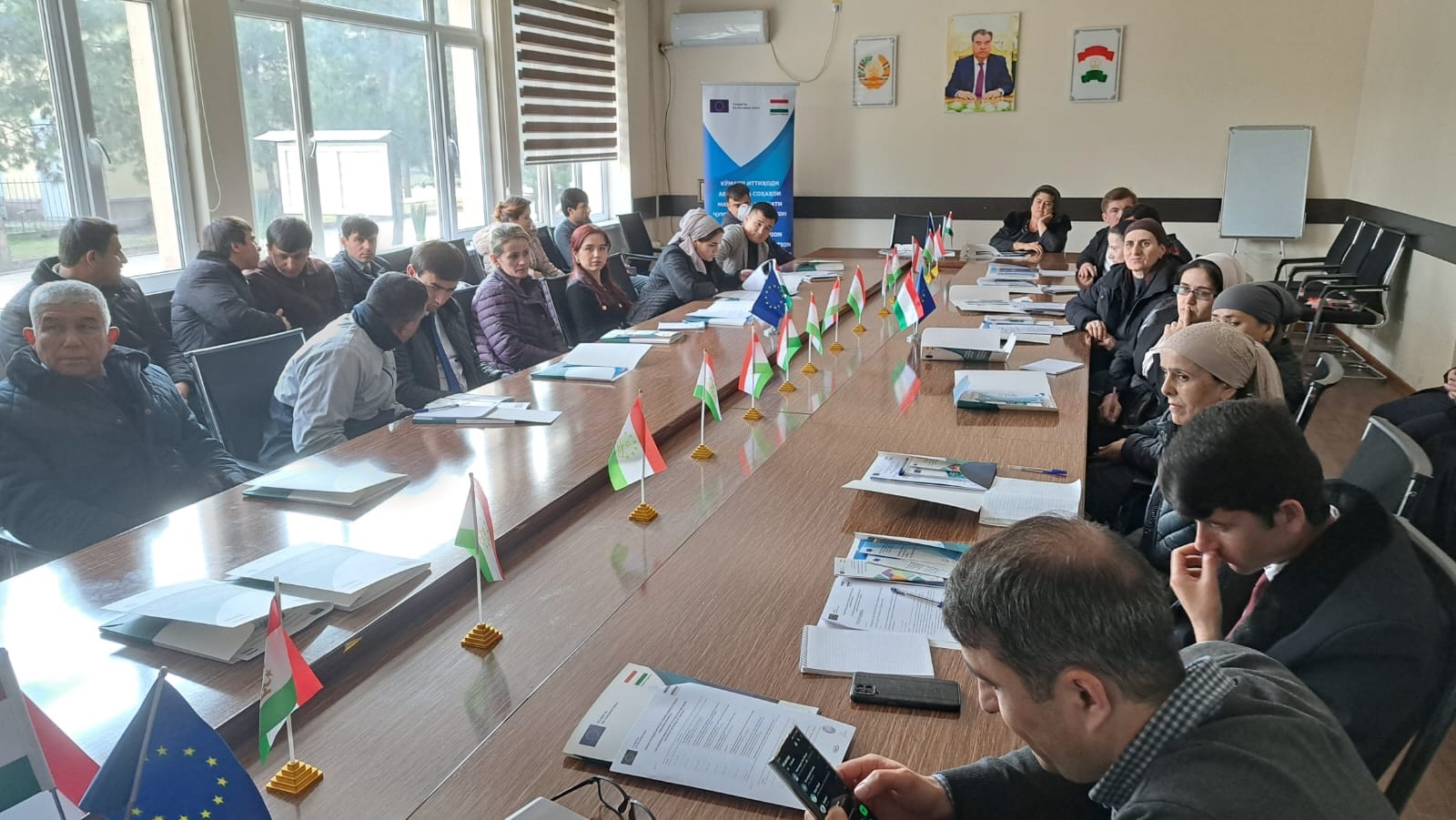
Building Leadership Capacity for AI Integration
Sarob, Republic of Tajikistan
17 – 18 May 2025
Contact Information:
📧 info_qesp2pro@eductrade.com | loiq.mirov@eductrade.com
🌐 https://maorif.tj/projects/qesp2/news
This publication was produced with the financial support of the European Union. Its contents are the sole responsibility of the consortium led by Eductrade and do not necessarily reflect the views of the European Union.
Executive Summary
Tajikistan is charting an ambitious course to integrate artificial intelligence (AI) into its education system as part of a broader National AI Strategy (up to 2040). The strategy, adopted in 2022, aims to harness AI for accelerated socio-economic development and identifies education as a priority sector. Key targets include introducing AI education in schools (national curriculum by 2026), establishing AI departments in at least seven universities by 2026, and building a skilled AI workforce (5,000 specialists by 2040). These goals align with global trends: UNESCO highlights AI’s potential to “address some of the biggest challenges in education,” innovate teaching, and support inclusive learning. Tajikistan’s strategy also emphasizes ethics, infrastructure, and language-accessible materials early on, mirroring international best practices.
However, significant gaps exist. Only about 42% of Tajiks use the Internet, and school connectivity is very uneven. In Dushanbe roughly 56% of teachers have Internet at school, whereas outside cities that figure may drop to 10%. Most rural schools lack reliable computers or high-speed links, but relevant Ministries are supporting schools with ICT.
Nonetheless, initial pilot programs and partnerships offer proofofconcept. Extracurricular AI classes have begun in secondary schools, and a Council on AI is supporting teacher training and curriculum development. AI majors and labs have been established at several universities. NGOs and startups (e.g., TajRupt and zypl.ai, IT-run, Alif and Humo academies, Ilmkhona) have trained hundreds of young Tajiks in data analytics and machine learning and built firstoftheirkind AI labs. These efforts demonstrate early momentum, but sustaining and scaling success will require a holistic approach: targeted investment in connectivity, systematic teacher upskilling, inclusive curriculum reform, and publicprivate partnerships.
Key Recommendations: Strengthen policy coordination and governance; prioritize equitable digital infrastructure expansion; integrate AI literacy and critical thinking into all levels of education; implement largescale teacher professional development in AI and ICT; support partnerships to build labs and content; and embed ethical and inclusive practices in every initiative. With coherent policy and resources, AI can become a force multiplier in Tajikistan’s education sector—improving learning outcomes, preparing youth for 21stcentury jobs, and ensuring Tajikistan’s workforce is competitive in the knowledge economy.
Table of Contents
Executive Summary 2
Introduction: AI in Education – Global Context and Tajikistan’s Vision 4
Strategic Framework: National AI and Digital Education Policies 5
Implementation Analysis: Programs and Stakeholder Roles 7
Infrastructure and Capacity Assessment 9
Digital Infrastructure 9
Human Capacity 9
Opportunities and Challenges of AI in Education 11
Comparative Insights: Lessons from Other Developing Countries 12
Policy Recommendations for Equitable AI Integration 13
Conclusion 14
Sources 15
Introduction: AI in Education – Global Context and Tajikistan’s Vision
AI technologies are rapidly transforming education worldwide. UNESCO notes that AI “has the potential to address some of the biggest challenges in education today, innovate teaching and learning practices, and accelerate progress towards SDG4.” AIdriven tools (e.g., intelligent tutoring systems, analytics dashboards, adaptive content) can personalize learning, support teachers, and enhance inclusion. At the same time, experts warn of risks—widening digital divides, data privacy concerns, and the need for sound pedagogy and ethics. The international consensus is that education systems must prepare citizens for an AIrich future by embedding AI literacy, critical thinking, and digital skills into curricula.
Tajikistan has taken an unusually proactive stance among developing countries. In 2021–22 it adopted a National Strategy for the Development of Artificial Intelligence up to 2040, becoming the first Central Asian country (and first lowincome country) to formalize a comprehensive AI strategy. The strategy’s goals include contributing 5% to GDP via AI by 2040, accelerating industrialization, and strengthening human capital. Notably, education is singled out as a priority: the strategy calls for integrating digital and AI skills into schooling, developing AI faculty and labs in universities, and building a talent pipeline. In short, Tajikistan envisions an education system that fosters a new generation of problemsolvers and AI specialists to drive future growth.
The strategy outlines a staged roadmap (2023–2040): the initial phases focus on legal frameworks, institutions (AI Council), connectivity improvements, and teacher training; middle phases involve piloting and importing AI tools; later phases aim for deep AI integration in public services and education, with automation of routine tasks. This mirrors global practice: “initial capacitybuilding followed by gradual scaling of AI integration” is recommended by UNESCO and other bodies. In sum, Tajikistan’s strategic vision is highly ambitious and broadly aligned with international best practices (humancentered, phased, ethicsaware).
Strategic Framework: National AI and Digital Education Policies
Tajikistan’s approach is anchored in multiple interlocking policies. The National AI Strategy (2021–2040) provides the overarching vision and sectoral goals. Key elements include: strengthening digital infrastructure, integrating AI education, promoting AI research, and ethical governance. For education, the strategy calls for introducing AI and programming into school curricula, developing Tajiklanguage AI textbooks, and creating AI faculties and labs at universities.
Complementing the AI Strategy is the Concept for Transition to Digital Education (2022–2042), which aims to modernize teaching methods, elearning platforms, and ICT skills in schools (see Table 1). Meanwhile, the MediumTerm Program for Digital Economy (2021–25) has begun connecting schools to fiberoptic internet and launching eservices like eDonish, an electronic school management system. These policies converge: for example, the AI Strategy references the Digital Economy program, envisioning AIenabled administration once connectivity is in place.
Table 1: Strategic Objectives and Key Initiatives (AI/Education Plans)
Strategic Objective | Key Initiatives/Policies | Targets / Indicators |
AIReady Education System | Update school curricula to include AI, coding, and digital literacy; develop Tajiklanguage AI textbooks | • AI classes in K(11)12 curricula by 2026 |
• AI content in all IT courses | ||
Build AI Talent Pipeline | Establish AI majors/departments at universities; sponsor AI research labs; support internships (e.g., zypl.ai) | • AI departments in ≥ 7 universities by 2026 |
• Train 5,000 AI specialists by 2040 | ||
Improve Digital Infrastructure | Expand broadband to schools; equip schools with computers; maintain labs | • Highspeed Internet in all schools (target > 90%) |
• Computer:student ratio targets | ||
Enhance Teacher Capacity | Launch nationwide ICT/AI teacher training; integrate digital pedagogy into colleges | • 100% of teachers trained in ICT by 2030 |
• 50 “master teachers” trained by 2025 | ||
Inclusive Access and Ethics | Subsidize equipment for rural schools; develop lowbandwidth/offline AI tools; embed AI ethics in curriculum | • Urban/rural access ratio improves annually |
• AI ethics guidelines adopted | ||
PublicPrivate and International Partnerships | Collaborate with NGOs, private sector, donors for joint projects | • Number of PPP projects |
• Donor funding leveraged |
These objectives are reflected in concrete policy actions. Tajikistan has already created AI faculties and two privately funded AI labs. The strategy mandates organizing AI Olympiads, hackathons, and club networks to spur innovation. The digitaleducation concept addresses the same goals: improving teachers’ digital skills, providing unified elearning platforms, and upgrading hardware. In sum, Tajikistan’s policy framework is comprehensive—spanning legal reforms, infrastructure programs, curriculum changes, and stakeholder mobilization—and aligns closely with global recommendations for AI in education.
Implementation Analysis: Programs and Stakeholder Roles
K(11)12 School Initiatives: The first visible foray has been pilot AI courses in secondary schools. In late 2024, the government (Ministries of Industry and Ministry of Education and Science via the AI Council) began offering extracurricular AI lessons in a small number of urban and regional schools. These classes cover AI fundamentals, data analysis, and realworld applications. Teachers were pretrained through intensive bootcamps, including participants from remote provinces. The successful pilot quickly expanded from five to ten schools (in Dushanbe, Khujand, etc.), with plans to integrate AI into the standard IT curriculum by 2026. Notably, the pilot deliberately included rural and genderdiverse cohorts to promote equity. In parallel, AIrelated extracurricular clubs and competitions (e.g., hackathons) are being introduced to engage more students.
At the schoolmanagement level, programs like eDonish have modernized administration. Launched in 2020, eDonish provides electronic gradebooks, attendance tracking, and parent portals via SMS. It reached over 105 schools and 200,000 students in Dushanbe by 2021, laying groundwork for future learning analytics.
Vocational and Higher Education: At the tertiary level, significant strides are evident. Several universities now offer undergraduate and master’s programs in AI and data science. For example, by 2024 the Technological University of Tajikistan and Khujand Polytechnic Institute launched AI departments and labs. The government aims for at least seven such university programs by 2026. To complement theory, initiatives like UNDP’s Upskill 1.0 project provided machinelearning pedagogy training to 50 university professors. Vocational institutions are also piloting AI modules (though full rollout is pending) to ensure technicalskill students gain AI exposure.
NGOs and Private Sector: Nongovernment actors play a crucial role. The NGO TajRupt has been especially active. With UNDP support, TajRupt founded Tajrupt.ai, Central Asia’s first youth AI lab, and ran free fourmonth “AI Academy” courses in Dushanbe and Khujand. Between 2021–22, these courses trained about 150 young Tajiks in Python, ML, and statistics. Importantly, they include female participants, addressing gender gaps. Many alumni went on to jobs in local startups; for example, some now work at zypl.ai, a fintech founded by a TajRupt alumnus. Zypl.ai itself exemplifies the startup environment: this Dushanbebased company provides AIdriven credit scoring, and its software is used by over 35 banks in Eurasia. The creation of AI labs and hackathon events shows a growing ecosystem.
Kasbi Man: An AI-Driven Career Guidance Platform
As part of Tajikistan’s effort to modernize education and empower youth, the AI-powered career guidance platform Kasbi Man (https://kasbiman.pro) represents a national innovation in digital learning and self-development. Developed in collaboration with UNICEF, the Ministry of Education and Science, and the Ministry of Labor, Migration and Employment of Population, the portal leverages machine learning to provide personalized career recommendations based on a student’s interests, values, and socio-economic background. After completing a psychometric test, users are matched with tailored educational content, courses, and potential career paths. As an open-source tool scalable nationwide, Kasbi Man aligns closely with Tajikistan’s AI strategy by equipping adolescents with essential decision-making and employability skills, especially in underserved regions.
Table 2: Major AI Education Initiatives and Stakeholders
Initiative / Program | Description & Scale | Key Actors |
AI School Pilot Courses | AI fundamentals taught in ~10 secondary schools (urban + rural); integrated into IT classes by 2026 | MoINT AI Council; MoES |
AI Clubs & Olympiads | Extracurricular AI clubs; national Olympiad | AI Council, NGOs |
AI Majors in Universities | Five universities now offer AI degrees; goal of ≥ 7 by 2026 | MoES, Universities |
Faculty Development (Upskill) | ML pedagogy training for 50+ university professors; ongoing PD | UNDP, AI Council |
eDonish Digital Platform | School management (attendance, grades); 105 schools | MoES, Dushanbe gov’t |
AI Academy (TajRupt) | Free fourmonth AI courses; ~150 graduates | TajRupt (NGO), UNDP |
Private AI Labs | Two AI R&D labs in Dushanbe and Khujand | Private sector |
PublicPrivate Competitions | Hackathons and grants | AI Council, Startups |
KasbiMan.pro | AI powered test for career guidance | MoES, MoLME, UNICEF, EU, TajRupt, ICT |
Infrastructure and Capacity Assessment
Digital Infrastructure
The success of AI education hinges on foundational infrastructure and human capital—areas where Tajikistan faces significant constraints. Internet and device access remain limited, especially outside cities. About 42% of Tajiks use the Internet nationwide. Broadband rollout is slow due to mountainous terrain and budget limits. In the capital, roughly half of schools have Internet, but in rural provinces only 10–25% do. The World Bank notes that high connectivity costs make Tajikistan one of the region’s lowest in broadband penetration. Many village schools have no computer labs, forcing teachers to rely on expensive personal mobile data for even basic ematerials. Where computers or smartboards are supplied, maintenance is poor – equipment often remains unrepaired.
There has been progress: the Digital Economy Program is expanding fiberoptic links to schools and providing satellite connectivity via projects like Avanti’s HYLAS2 network. The eDonish platform is already in 105 Dushanbe schools, indicating clustered infrastructure there. Still, extending these upgrades to all regions is a major challenge.
Table 3: Infrastructure and Digital Access Indicators
Metric | Status (2023–24) | Notes / Target |
National Internet Users | ≈ 42% of population | Goal: ≥ 75% by 2030 |
Mobile Connectivity | Subscription rate ≈ 103% (mostly 3G/4G) | High, but largely via phones |
School Internet Access (Dushanbe) | ≈ 56% of teachers report school Internet | 9–25% in other regions |
eDonish Coverage | 105 schools, 200k students | Expansion planned |
Computer Availability | Major rural gap; many outdated labs | Target: ≥ 1 computer per 10 students |
Human Capacity
Teacher readiness and curriculum support are likewise weak. Most educators have had little ICT or AI exposure: only about 3% of teachers received any ICT professional development in the past five years. Many are uneasy with digital tools and cite lack of training and incentives. Pilot programs are training cohorts of “master” teachers, but scaling up will require embedding digital pedagogy into all teacher colleges and ongoing inservice programs.
Curriculum and content also pose challenges. Virtually all AI and computerscience textbooks are in Russian or English; there is a lack of educational literature in Tajik. Limited electricity and outdated labs in rural schools further impede hightech lessons. On the tertiary side, only one Tajik university had an AI program in 2022, growing to five in 2023, meaning a very small faculty base. Even these new AI experts may be lured abroad by higher pay, risking brain drain.
Table 4: Capacity Constraints and Ongoing Measures
Challenge | Description | Current/Proposed Actions |
Connectivity Gap | Low rural Internet; reliance on phones | Fiber, satellite, and mobile hotspots |
Device Shortage | Few computers in rural schools | Donations; PPP equipment programs |
Teacher ICT Skills | ≈ 3% trained; motivation low | Scale training; incentives and PD |
AI Curriculum Materials | No Tajik AI textbooks | Develop local language content |
UrbanRural Divide | Cities far ahead of provinces | Subsidies; lowbandwidth solutions |
Brain Drain | Skilled professionals emigrate | Incentives; diaspora engagement |
Opportunities and Challenges of AI in Education
AI offers transformative opportunities if inclusively adopted. Personalized learning can significantly improve outcomes. Intelligent tutoring systems can adapt to each student’s pace, boosting engagement and achievement. In Tajikistan’s context, even basic AI content can foster analytical thinking and computational skills, helping shift students towards STEM careers. Over time, an AIliterate population would support highvalue industries: startup zypl.ai shows that homegrown entrepreneurs can export fintech software abroad. Broadly, integrating AI into education aligns with Tajikistan’s longterm shift from a remittancebased economy to one driven by innovation and can reduce brain drain by creating local tech jobs.
However, these prospects come with risks. The digital divide poses a major threat to equity: wellresourced urban schools might advance quickly, leaving rural and poor schools further behind. Mitigation will require targeted subsidies and contextappropriate tools (e.g., offline AI learning modules for lowbandwidth areas). Without deliberate outreach, girls and marginalized groups could be excluded; mentorship programs and scholarships for girls are essential.
Systemic educational deficiencies must also be addressed. AI cannot fix low learning outcomes without broader reforms. Critics caution that simply adding AI to a weak system could result in superficial gains if teachers cannot use it effectively. Ethical and regulatory issues (student data privacy, algorithmic bias, healthy teacher–student interactions) must be managed. Finally, sustainability is a concern—many initiatives depend on a few champions and donor funding; institutionalization and stable financing are needed.
Comparative Insights: Lessons from Other Developing Countries
China: Largescale investment in adaptive learning and AI tutoring, including automated essay scoring, showcases how government backing and local content development can personalize learning at scale.
Uruguay: Plan Ceibal’s adaptive mathematics platform (PAM) demonstrates how nationwide digital initiatives, aligned with curriculum and teacher training, can improve outcomes in a middleincome country.
Brazil: Geekie’s adaptive platform, accredited by the Ministry of Education and used by thousands of schools, highlights how public validation and a oneforone model (private licenses fund public ones) can democratize AI access.
South Africa: Daptio illustrates an Africandeveloped AI solution focused on deep analytics for personalized learning, even in lowresource environments.
Kenya: Mobilefirst solutions like MShule (SMSbased AI tutoring) and iMlango (satellite broadband plus virtual tutors) show how offline or lowbandwidth AI can reach remote communities and integrate analytics into existing curricula.
Bhutan & Kyrgyzstan: Earlystage efforts to build integrated student data systems demonstrate that robust data foundations are prerequisites for effective AI adoption.
Common lessons include the need for teacher training, curriculum alignment, and equityfirst design. Political commitment and publicprivate partnerships are vital enablers.
Policy Recommendations for Equitable AI Integration
• Strengthen Governance and Coordination: Establish a highlevel interministerial task force to oversee AI education, with clear roles and measurable milestones.
• Prioritize Equitable Digital Infrastructure: Fund rural broadband expansion, equip schools with devices, and ensure maintenance and reliable electricity.
• Embed AI and Digital Skills Across Curriculum: Integrate computational thinking and AI literacy, develop Tajiklanguage materials, and focus on ethics and critical thinking.
• Scale Up Teacher Training: Implement nationwide ICT and AI professional development, incentivize participation, and embed digital pedagogy in teachertraining colleges.
• Foster Public–Private Innovation: Support NGOs, startups, and universities with grants and pilot opportunities; encourage EdTech adaptations to local contexts.
• Emphasize Ethics, Inclusion, and Gender Equity: Adopt dataprotection guidelines, set participation targets for girls and marginalized groups, and run public awareness campaigns.
• Monitor and Adapt: Create an education analytics unit to track progress and iterate policies; regularly evaluate pilot programs and scale successful models.
Conclusion
Tajikistan’s comprehensive strategy lays a strong foundation, and early initiatives show promise. The coming years should focus on scaling pilots equitably, building underlying infrastructure, and continuously aligning efforts with global best practices and local needs. With prudent policy, adequate resources, and inclusive design, AI can become a cornerstone of Tajikistan’s educational modernization and a driver of longterm socioeconomic development.
Sources
Artificial Intelligence in Education: Challenges and Opportunities for Sustainable Development – UNESCO, accessed May 10, 2025, https://unesdoc.unesco.org/ark:/48223/pf0000366994
Strategy for the Development of Artificial Intelligence in the Republic of Tajikistan for the Period up to 2040 – Government of Tajikistan, accessed May 10, 2025, https://dig.watch/resource/strategy-for-the-development-of-artificial-intelligence-in-the-republic-of-tajikistan-for-the-period-up-to-2040
Concept on the Transition to Digital Education in the Republic of Tajikistan up to 2042 – Ministry of Education & Science (reference PDF), accessed May 10, 2025, https://www.gpekix.org/sites/default/files/webform/submit_to_the_library/943/Goin_the_distance_Readiness_for_digitalization_and_distance_education_in_Tajikistan.pdf
Tajikistan Digital Foundations Project (P171382) – World Bank, accessed May 10, 2025, https://projects.worldbank.org/en/projects-operations/project-detail/P171382
PAM – Plataforma Adaptativa de Matemática (Plan Ceibal, Uruguay), accessed May 10, 2025, https://www.globalpartnership.org/blog/webinar-introducing-adaptive-learning-math-uruguay
Adaptive Learning in Brazil: Geekie Case Study – AI for SDGs Academy, accessed May 10, 2025, https://ai-for-sdgs.academy/case/65
How Geekie’s Adaptive Education Shattered “Centuries” of Pain in Brazil – Wired, accessed May 10, 2025, https://www.wired.com/story/claudio-sassaki-wired-2015
Liulishuo: AI-Enabled English-Learning Platform (LAIX Inc.) – company site, accessed May 10, 2025, https://www.liulishuo.com/en/aboutus.html
M-Shule: SMS Knowledge-Building Platform for Adaptive Learning – M-Shule, accessed May 10, 2025, https://www.mshule.com/
Technology Overview – iMlango Digital Attendance & Maths-Whizz – iMlango, accessed May 10, 2025, https://www.imlango.com/technology
Daptio: Deep-Analytics Personalised Learning for Africa – AI for SDGs Academy, accessed May 10, 2025, https://www.ai-for-sdgs.academy/case/199
ICT Competency Framework for Teachers (Version 3) – UNESCO, accessed May 10, 2025, https://teachertaskforce.org/sites/default/files/2020-07/ict_framework.pdf
OpenAI and UNICEF – Accelerating Digital Textbook Access – UNICEF USA, accessed May 10, 2025, https://www.unicefusa.org/about-unicef-usa/partnerships/companies/openai
Achieving Universal Connectivity for the Education Sector in the Republic of Tajikistan – UNICEF Tajikistan, 2024, accessed May 10, 2025, https://www.unicef.org/tajikistan/reports/achieving-universal-connectivity-education-sector-republic-tajikistan
TajRupt – Central Asia’s First Youth AI Laboratory – TajRupt, accessed May 10, 2025, https://www.tajrupt.org/
Commercial Bank International Leads Investment Round in Generative-AI Fintech zypl.ai – zypl.ai (blog), accessed May 10, 2025, https://zypl.ai/blog/commercial-bank-international-leads-investment-round-in-generative-ai-fintech-zypl-ai
Announcing the Call for Best Practices – UNESCO, accessed May 10, 2025, https://www.unesco.org/en/articles/announcing-call-best-practices
How Can AI Shape Education? A Masterclass for Teachers on the International Day of Education – UNESCO, accessed May 10, 2025, https://www.unesco.org/en/articles/how-can-ai-shape-education-masterclass-teachers-international-day-education
Artificial Intelligence: Best Practices – LibGuides – UIC School of Law, accessed May 10, 2025, https://libraryguides.law.uic.edu/c.php?g=1431863&p=10627971
A Matter of Choice: People and Possibilities in the Age of AI – UNDP Human Development Report 2025, accessed May 10, 2025, https://www.undp.org/sites/g/files/zskgke326/files/2025-05/human_development_report_2025.pdf
9